
Free written scope consultation - allowances, timeline, and change-order rules on paper before a single trade is scheduled
Windows & doors
 Before
 After
After Before
 After
After Before
 After
AfterCambria Driveway & Pavers: The Santa Clara Owner’s Guide
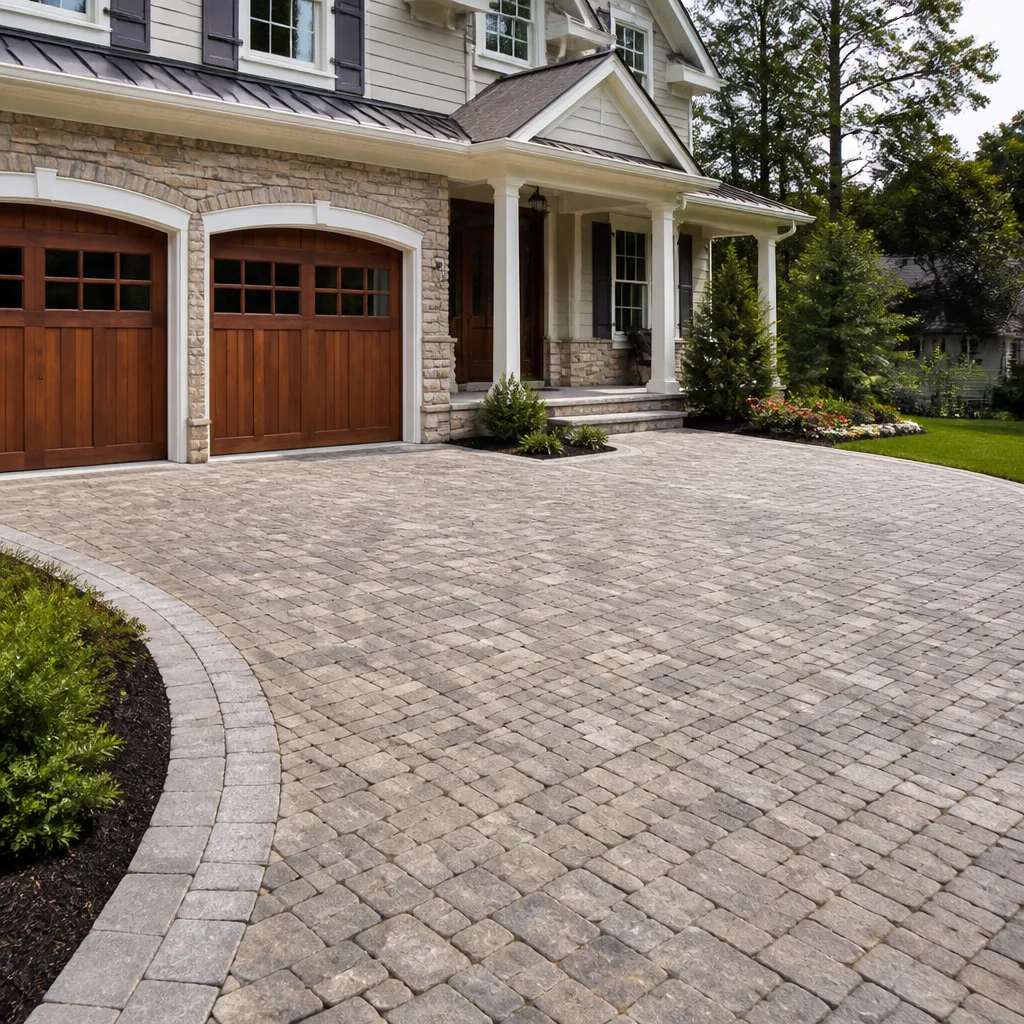
Cambria driveway and paver systems in Santa Clara typically run $7,000-$18,000 installed for paver driveways and $3,500-$11,000 for paver patios, depending on substrate condition and pattern complexity. We stock Cambria-compatible edge restraints, polymeric sand, and paver base materials for same-day repair starts. Most Santa Clara owners notice the failure first as shifting pavers along the driveway apron or pooling water where the grade used to drain clean toward the street.
Which Cambria Models This Applies To
Cambria’s paver line is not a single SKU - the brand sources through regional distributors, and what lands in Santa Clara County usually carries Pacific Northwest or Central Valley batch codes. The edge restraint profile matters: Cambria-specified installations typically use 6-inch aluminum L-profile or heavy-duty plastic Snap Edge on curves tighter than 8 feet radius. Check the paver itself for a stamped “CAMBRIA” on the spacer lug, or look for a cream-colored tag under the first course if your installer left documentation. The batch code, something like CAM-24-SJ or CAM-23-FR, tells us which sand gradation and which edge restraint gauge the original spec called for.
OEM Cambria polymeric sand runs $45-$65 per bag through authorized dealers; we stock Techniseal RG+ as a tested equivalent at a lower per-square-foot cost, and we document the substitution on your invoice. For base material, Cambria’s spec sheet calls for 3/4-inch crushed aggregate with fines; we use the same gradation from Graniterock’s Santa Clara yard, and we keep the test data sheet on file. If your installation used the older Cambria “permeable” series with 1/4-inch joint gaps, standard polymeric sand will not bind - that’s a compatibility gotcha we catch before we quote.
Signs Your Cambria Driveway & Pavers Is Failing
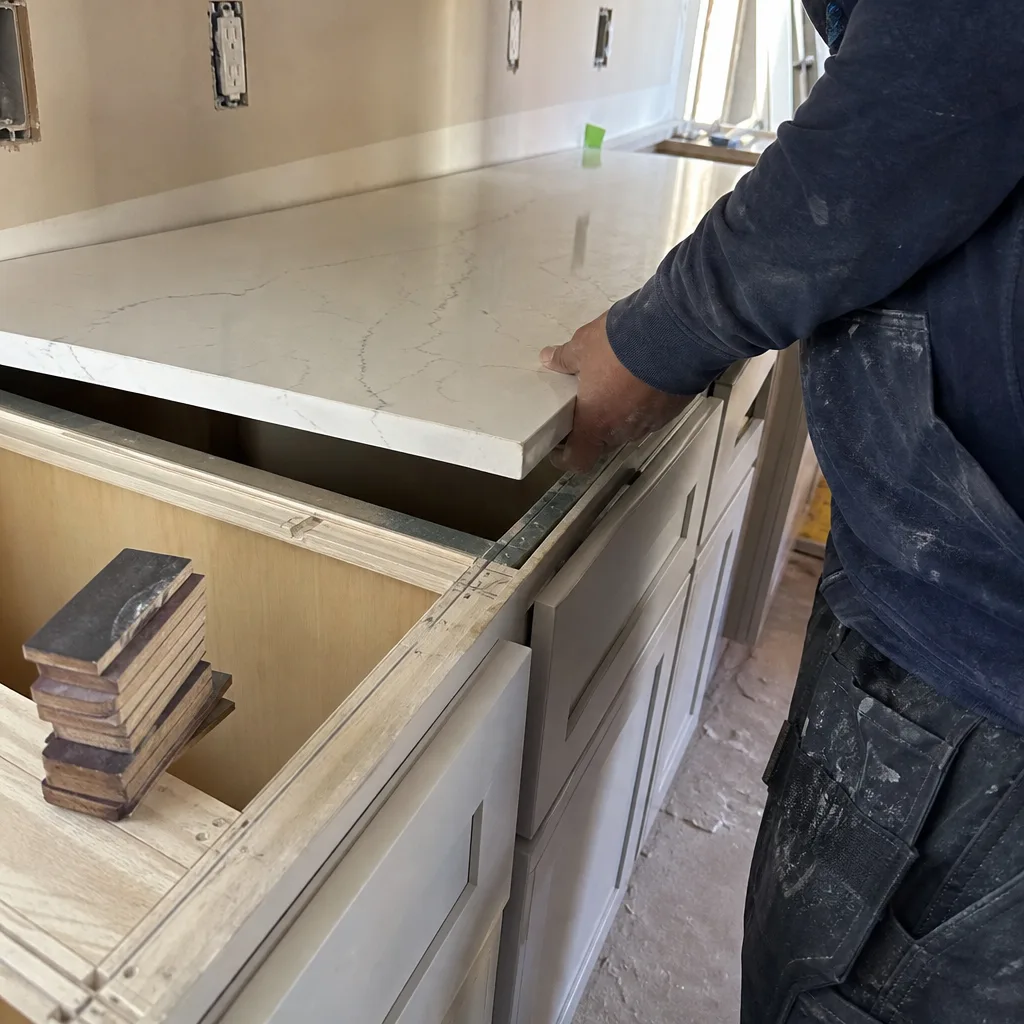
- Pavers rocking underfoot or sounding hollow when tapped. The bedding sand has washed out or compacted unevenly, usually from a failed edge restraint that let the perimeter spread. In Santa Clara, this accelerates where irrigation spray hits the driveway daily.
- Weeds growing through joints that were previously clean. The polymeric sand has degraded from UV exposure or was never fully activated during installation. Cambria-specified sand should last 7-10 years in our climate; earlier failure suggests insufficient watering during the set phase.
- Water pooling where it used to drain. The subgrade has settled or the original pitch was lost when pavers shifted. Santa Clara’s clay-heavy soils in neighborhoods like Rivermark and Northside expand and contract seasonally, stressing the base layer.
- Chipped or spalled paver surfaces, especially on the driveway entry. De-icing salts or magnesium chloride products react with Cambria’s concrete-composite body. We see this most on south-facing driveways where freeze-thaw cycles concentrate.
- Sunken band along the garage slab or walkway intersection. The concrete haunch or edge restraint has failed, letting the paver field migrate toward the lower grade. This is structural, not cosmetic - the base needs recompaction, not just sand refill.
 Before
 After
AfterReplacement Cost & What’s Included
| Scope | Price Range in Santa Clara | What’s Included |
|---|---|---|
| Edge restraint replacement (linear feet) | $12-$22/LF installed | Aluminum or heavy-duty plastic profile, 12-inch spikes, excavation, recompaction |
| Polymeric sand refresh (per 100 sq ft) | $180-$320 | Power washing, sand placement, water activation, cure monitoring |
| Base repair / localized lift and relay | $450-$900 per area | Paver removal, base regrade, new bedding sand, relay, cutting as needed |
| Full paver driveway replacement | $7,000-$18,000 | Removal, subgrade prep, base, bedding, pavers, edge restraint, sand, seal option |
The range depends on access (can we get a mini-excavator to the site or hand-dig?), paver availability (discontinued Cambria patterns require sourcing through salvage or full replacement), and what’s underneath - we’ve found everything from undocumented irrigation lines to old concrete slabs that were supposed to be removed. Under Clause 1 of the Haven Standard, your written quote itemizes each line: demolition, disposal, base material by the ton, paver count, labor hours, and the 365-Day Done Right Promise. No work starts until you have that number in writing.
DIY or Call Us?
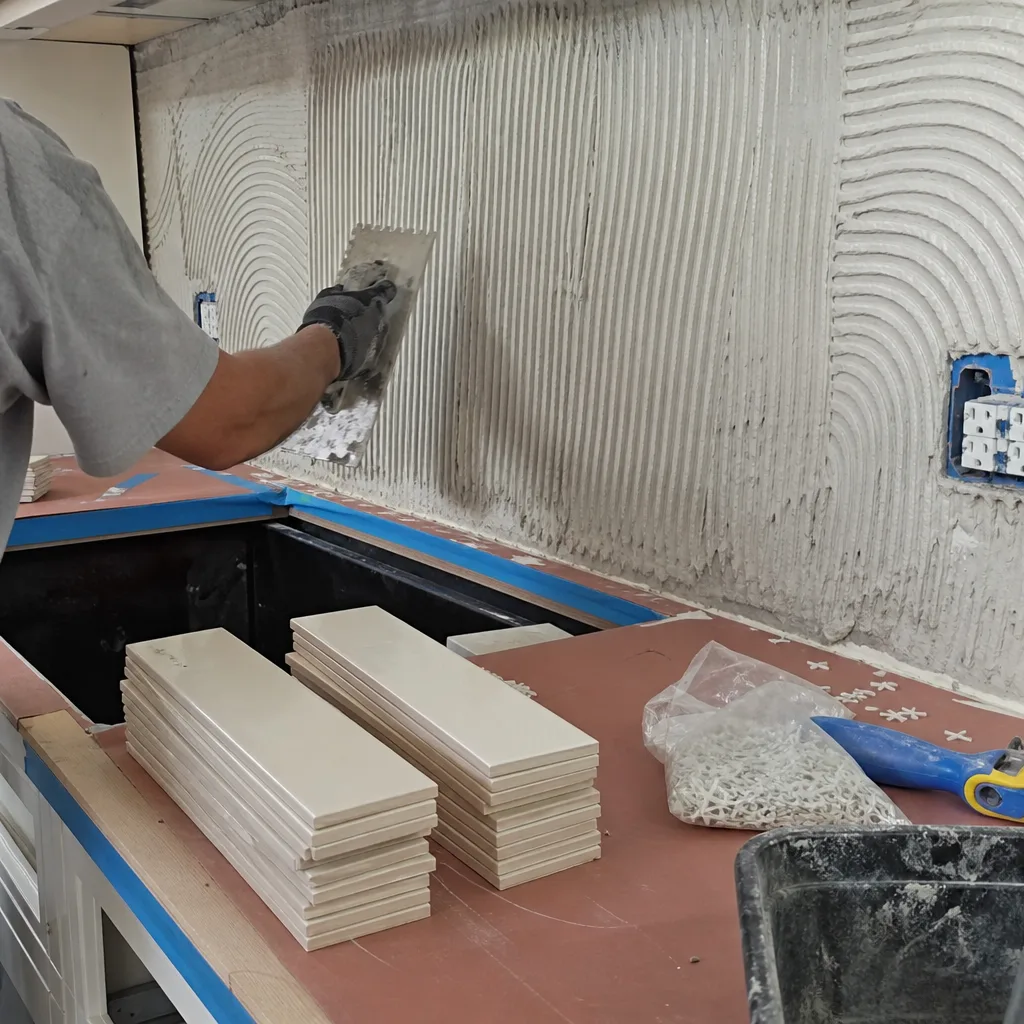
What you can safely check: lift one paver at the failure edge and look at the base. If you see mud, roots, or standing water, the drainage layer has failed - that’s beyond sand refill. If the base looks like compacted gravel with uniform moisture, you might manage a polymeric sand refresh yourself, following the bag instructions exactly on a dry day with no irrigation running for 48 hours.
Where DIY goes wrong: edge restraint installation requires a gas-powered plate compactor and a string line held to grade - hand-tamping leaves voids that show up as dips the following winter. Cutting pavers for a tight fit against an existing slab demands a wet saw with diamond blade; the dust is silica-laden and hazardous without proper respirator and water suppression. And if your Cambria installation sits on a concrete base with mortar-set pavers, removal without cracking adjacent units is a skill, not a guess. We’ve cleaned up enough Santa Clara projects where the homeowner’s weekend repair became a full relay. Call (669) 259-1843 and we’ll scope it, photograph it, and quote it - no charge for the visit.
FAQs
Properly installed Cambria pavers on a prepared base last 25-30 years in Santa Clara’s climate; the polymeric sand jointing needs refresh at 7-10 years, and edge restraints at 10-15 depending on soil movement and irrigation exposure. Call (669) 259-1843 for an assessment of where your installation sits in that cycle - estimates are free.
Localized lift-and-relay fixes the majority of failures we see: sunken areas, spread joints, or edge collapse. Full replacement only makes sense when the pattern is discontinued, the base is comprehensively undermined, or the customer wants to regrade for drainage. We stock KraftMaid, Silestone, and Kohler products as well, but for Cambria pavers we match existing patterns from our supplier network before recommending replacement. Call (669) 259-1843 to schedule a look.
Edge restraint and sand refresh on a standard two-car driveway apron: one day. Localized base repair with lift-and-relay: one to two days depending on paver count. Full driveway replacement: three to five days, plus a 48-hour no-traffic cure for the polymeric sand. We pull permits when the scope requires it, and we document each phase with the photo record included on every Rowan visit.
We carry aluminum edge restraint, Snap Edge profiles, Techniseal polymeric sand in tan and gray, and 3/4-inch base aggregate on every driveway and pavers crew. Specific Cambria paver colors and patterns we source from our Santa Clara supplier with next-day availability for most current SKUs. If your installation uses a discontinued pattern, we’ll know within the first site visit and present options before any work starts - that’s the Haven Standard, and it’s why we write the price first.
Grant Rowan keeps a running list of every tool that has ever failed him mid-project, mostly as a reminder to buy better next time. His crew applies the same discipline to your driveway: measure twice, document once, and never assume the last contractor left things square.
Ready to fix your Cambria driveway or pavers? Call (669) 259-1843 to schedule your free estimate. We’ll arrive with a camera, a written scope, and a price before anyone picks up a tool.
Written by Grant Rowan, Owner, Rowan Construction Group Santa Clara at Rowan Construction Group Santa Clara, serving Santa Clara and nearby areas.