
Free written scope consultation - allowances, timeline, and change-order rules on paper before a single trade is scheduled
Windows & doors
 Before
 After
After Before
 After
After Before
 After
AfterPlant Prefab Kitchen Remodeling: The Santa Clara Owner’s Guide
Plant Prefab kitchen remodeling in Santa Clara typically runs $14,000-$45,000 installed, with most projects in the $18,000-$28,000 range for a standard layout with mid-grade finishes. We stock Plant Prefab-compatible cabinet systems, hardware kits, and panel connectors, and we can usually start procurement within 48 hours of a signed scope. Most Santa Clara owners first realize something’s wrong when cabinet doors start sagging on their LivingHome 6 or LivingHome 8 series, or when the integrated panel seams separate after a few seasons of Bay Area temperature swing.
Which Plant Prefab Models This Applies To
Plant Prefab’s kitchen systems ship with two main cabinet platforms: the LivingHome series (6, 8, and 10 modules) and the more recent LivingAccessory line for ADU and addition projects. The hardware differs between them. LivingHome 6 and 8 units use a 32mm European hinge system with Blum-style clip plates; LivingHome 10 shifts to a heavier-duty Grass Nexis adjustable hinge to handle the wider door spans. The panel connector system is where most Santa Clara calls come from - the LivingHome series uses an aluminum T-slot extrusion with a nylon glide insert that fatigues after 7-10 years in our climate, especially in south-facing kitchens that catch afternoon sun through large glass walls.
To identify your exact system, check the upper right interior of any base cabinet for a small laser-etched Plant Prefab lot code (format: PP-YY-XXX). The two-digit year tells us which hinge generation you have. We’re an independent service provider - not affiliated with Plant Prefab - and we source both OEM replacement hardware direct from Plant Prefab’s supply chain and quality aftermarket equivalents from Hettich and Salice when the lead time on OEM runs long. For most Santa Clara kitchens, the aftermarket hinge performs identically at roughly 60% of the OEM unit cost, though we always note the substitution in writing before ordering.
Signs Your Plant Prefab Kitchen Remodeling Is Failing
- Doors sag or rub at the bottom corner. The 32mm hinge cup loosens in its bored hole, usually because the original MDF substrate has compressed from repeated loading. In Santa Clara’s drier summer months, the particleboard core shrinks slightly and the cup fit gets sloppy. We see this most in LivingHome 6 kitchens built between 2016 and 2019.
- Integrated panel seams gap or shadow. The T-slot connector’s nylon glide wears down, letting the panel face pull away from the cabinet box. Once the gap exceeds 1/16 inch, dust and cooking grease accumulate in the channel and accelerate the wear. This shows up first near the dishwasher or range where heat cycling is hardest on the nylon.
- Drawer boxes stick or rack sideways. Plant Prefab spec’d Blum Tandem slides on most LivingHome 8 units; the polymer telescoping housing cracks if the drawer is consistently overloaded beyond 75 pounds. The slide still functions, but the soft-close mechanism fails and the drawer bangs shut.
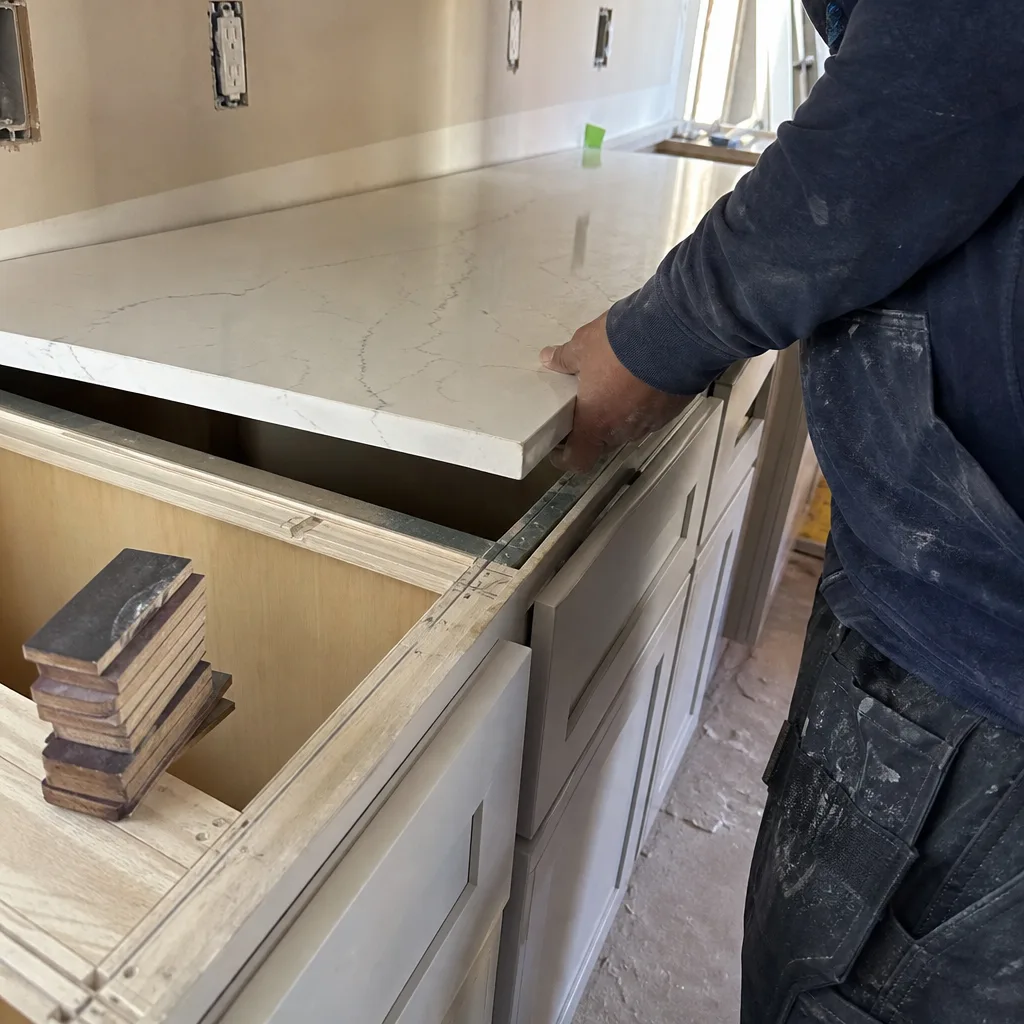
- Countertop settles or separates from the cabinet rail. The silicone bead between the quartz or composite top and the cabinet’s 3/4-inch rail degrades. In Santa Clara, this happens faster in homes without whole-house humidification, as the seasonal swing from 35% winter humidity to 65% summer humidity flexes the rail enough to break the seal.
- Island panels delaminate at the corners. The LivingHome 10 island uses a post-formed laminate wrap on a radius; the heat from a cooktop or downdraft vent, combined with the island’s structural movement, stresses the radius and the laminate lifts. We’ve replaced three of these in the Rivermark neighborhood alone, all facing the same southwest exposure.
 Before
 After
AfterReplacement Cost & What’s Included
| Component | Santa Clara Installed Range |
|---|---|
| Full kitchen remodel (Plant Prefab-compatible) | $14,000-$45,000 |
| Small kitchen refresh (cabinets, counters, hardware) | $9,000-$20,000 |
| Cabinet installation only | $4,000-$13,000 |
| Countertop installation (quartz/composite) | $2,000-$6,500 |
| Backsplash installation | $800-$2,500 |
| Kitchen island installation or rebuild | $3,000-$10,000 |
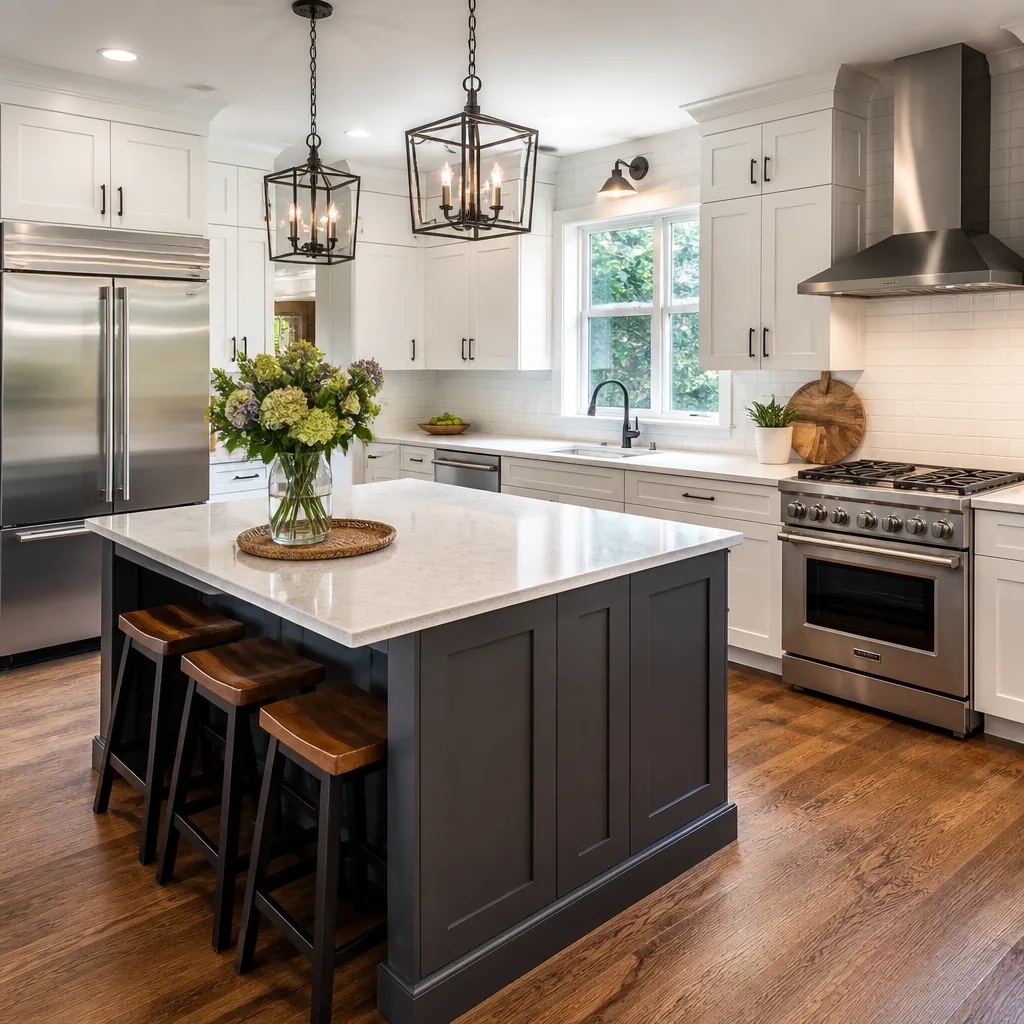
What drives the range: finish level (KraftMaid semi-custom vs. full custom), countertop material (Cambria quartz runs $75-$110 per square foot installed in Santa Clara, while Silestone pushes $95-$140), and whether we’re working within the existing Plant Prefab module footprint or reconfiguring the layout. Every quote is flat-priced with a written scope before work starts - Clause 1 of the Haven Standard. No change proceeds without a signed change order. The 365-Day Done Right Promise covers all labor and installation; material warranties pass through from the manufacturer. Call (669) 259-1843 for a written estimate.
DIY or Call Us?
There’s a clear line here. An owner can safely check hinge adjustment with a Phillips screwdriver - the Blum and Grass hinges have built-in vertical and horizontal adjustment cams that take five minutes to dial in. Tightening a loose cup screw is also straightforward, though we recommend blue threadlocker so it doesn’t walk out again.
Where DIY goes wrong: replacing the T-slot panel connector requires removing the cabinet face, which means supporting the countertop temporarily and re-leveling the box on reinstall. We’ve seen homeowners in Santa Clara crack their quartz trying to bridge the gap with shims. Drawer slide replacement on a Plant Prefab unit means disassembling the drawer box from the front - the doweled joints are tight, and prying with a screwdriver splits the MDF. And any work involving electrical relocation (moving under-cabinet LED drivers, relocating a switch for an island) needs a permit in Santa Clara per city code; we pull permits as standard on any job that touches electrical or plumbing.
Measure twice, document once, and never assume the last contractor left things square. If you’re unsure what’s failing, call (669) 259-1843. We’ll photograph the condition, name the part, and give you a written price before anyone picks up a tool.
FAQs
With proper installation and materials matched to the module spec, 20-25 years for the cabinet boxes, 10-15 years for hardware, and 15-20 years for quartz countertops. The Bay Area’s moderate climate helps - we don’t see the freeze-thaw damage that kills kitchens in colder zones - but the summer dry spell and winter humidity swing still stress adhesives and fasteners. Call (669) 259-1843 if you’re seeing early wear; estimates are free.
Sometimes. A sagging hinge cup can be re-bored and fitted with a hardwood dowel insert, which buys 3-5 years at roughly $80-$120 per door. Delaminated island corners can be injected with epoxy and clamped if the substrate is still sound. But T-slot connectors with worn nylon glides, cracked drawer slides, or separated countertop silicone all need full replacement - the repair costs nearly as much and doesn’t last. We’ll show you both options in writing.
Demolition through final punch on a standard Plant Prefab kitchen runs 3-4 weeks in Santa Clara, assuming no structural changes and permits pre-cleared. Cabinet lead time is usually the critical path: 4-6 weeks for KraftMaid semi-custom, 8-10 weeks for full custom. We coordinate delivery so demo and install are contiguous - no kitchen torn up longer than necessary. A hardware-only replacement (hinges, slides, connectors) takes 1-2 days.
We stock the most common failure items: Blum and Grass hinge sets, T-slot extrusions with nylon glides, Blum Tandem slide pairs, and panel seam clips in standard LivingHome finishes. LivingHome 10 island radius panels and custom-matched laminate are ordered to spec. We carry KraftMaid, Cambria, and Silestone samples in our Santa Clara office for same-day comparison. Call (669) 259-1843 to confirm availability for your lot code.
Written by Grant Rowan, Owner, Rowan Construction Group Santa Clara at Rowan Construction Group Santa Clara, serving Santa Clara and nearby areas.