
Free written scope consultation - allowances, timeline, and change-order rules on paper before a single trade is scheduled

Windows & doors

 Before
 After
After Before
 After
After Before
 After
AfterPlant Prefab Roofing: The Santa Clara Owner’s Guide
We stock and install Plant Prefab-compatible roofing components in Santa Clara, with most replacement jobs running $400-$1,800 for repairs and $8,000-$20,000 for full roof replacements depending on module configuration and finish. Most standard repairs are completed in a single visit once the part is matched to your model series. Plant Prefab owners usually discover a roofing issue after the first heavy rain of the season, when water tracks along the seam between a roof module and the factory-installed flashing, or when they spot lifted membrane edges from the sidewalk below.
Plant Prefab builds precision-engineered modules, but the roofing interface where factory assembly meets site installation is where we see the most calls. The transition detail, the membrane termination at the rake edge, and the standing-seam overlap zones are the three areas where a small gap becomes a leak path. In Santa Clara’s dry-summer, wet-winter climate, that leak path often stays hidden until the October or November storms hit and the water finds its way to the ceiling.
Which Plant Prefab Models This Applies To
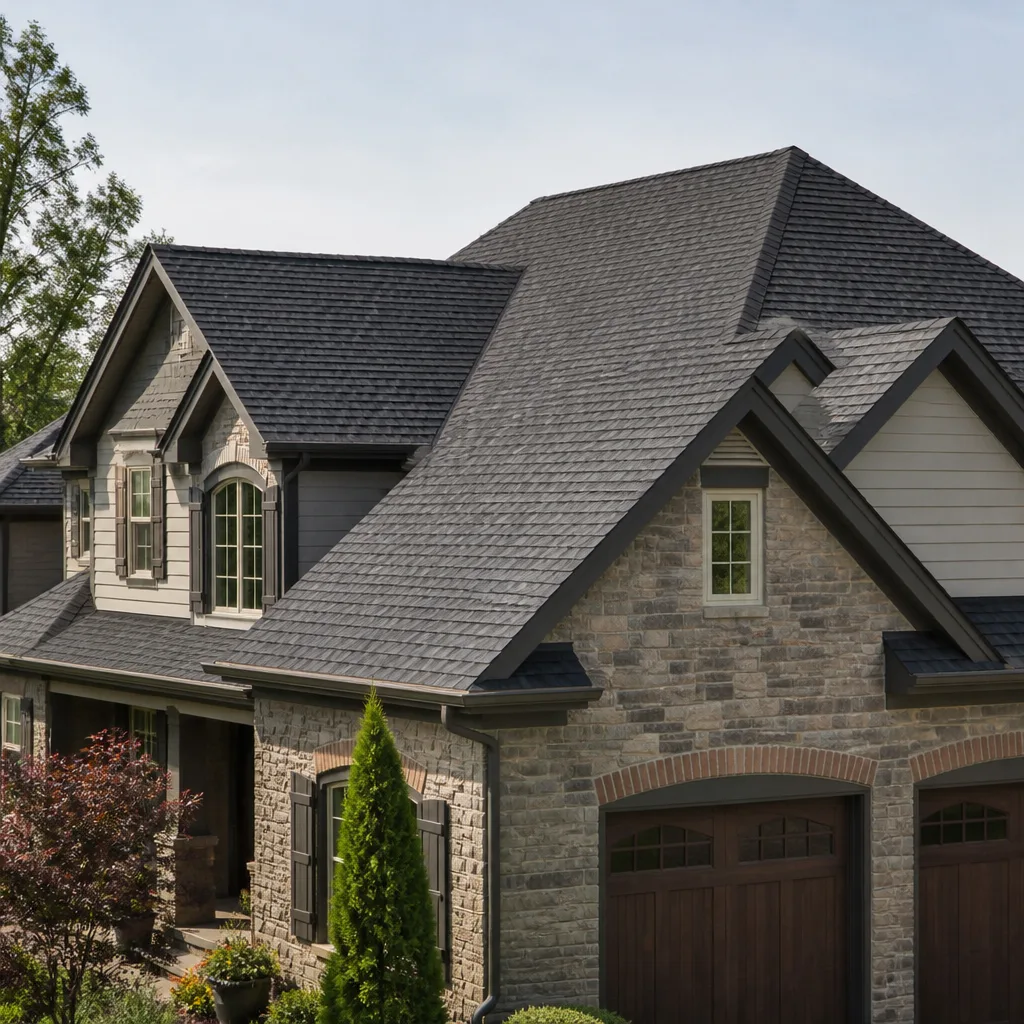
Plant Prefab has produced several model lines since 2016, and the roofing components vary by series year and module width. The LivingHome 10, LivingHome 6, and Cabana lines all ship with factory-installed standing-seam metal roofing or low-slope membrane assemblies, but the gauge of the metal, the clip spacing, and the membrane manufacturer change by production year. We cross-reference your module serial number, found on the electrical panel door or the utility chase label, against the factory specification sheet to confirm the exact profile before we quote.
The OEM roofing on most Plant Prefab modules is either a 24-gauge Kynar-coated standing seam or a 60-mil TPO membrane with pre-welded seam plates. For standing-seam repairs, we source matching coil from the same mill run when possible; when the color has been discontinued, we use a painted-to-match aftermarket panel with a comparable 30-year finish warranty. For membrane work, we stock Carlisle and Firestone 60-mil TPO in white and tan, which matches the factory membrane spec on units built 2019 and later. Earlier modules used a gray membrane that we source through our roofing supplier in San Jose. The compatibility gotcha: 2017-2018 modules used a proprietary clip spacing that differs from the current standard by 3/8 inch, so a generic standing-seam panel will not seat correctly without modification.
We are an independent service provider, not affiliated with Plant Prefab. Our parts knowledge comes from having repaired and replaced roofing on more than a dozen Plant Prefab modules across Santa Clara and San Mateo counties, including a full re-roof on a LivingHome 10 in the Rivermark neighborhood where the original membrane had reached end of life after 18 years of UV exposure.
Signs Your Plant Prefab Roofing Is Failing
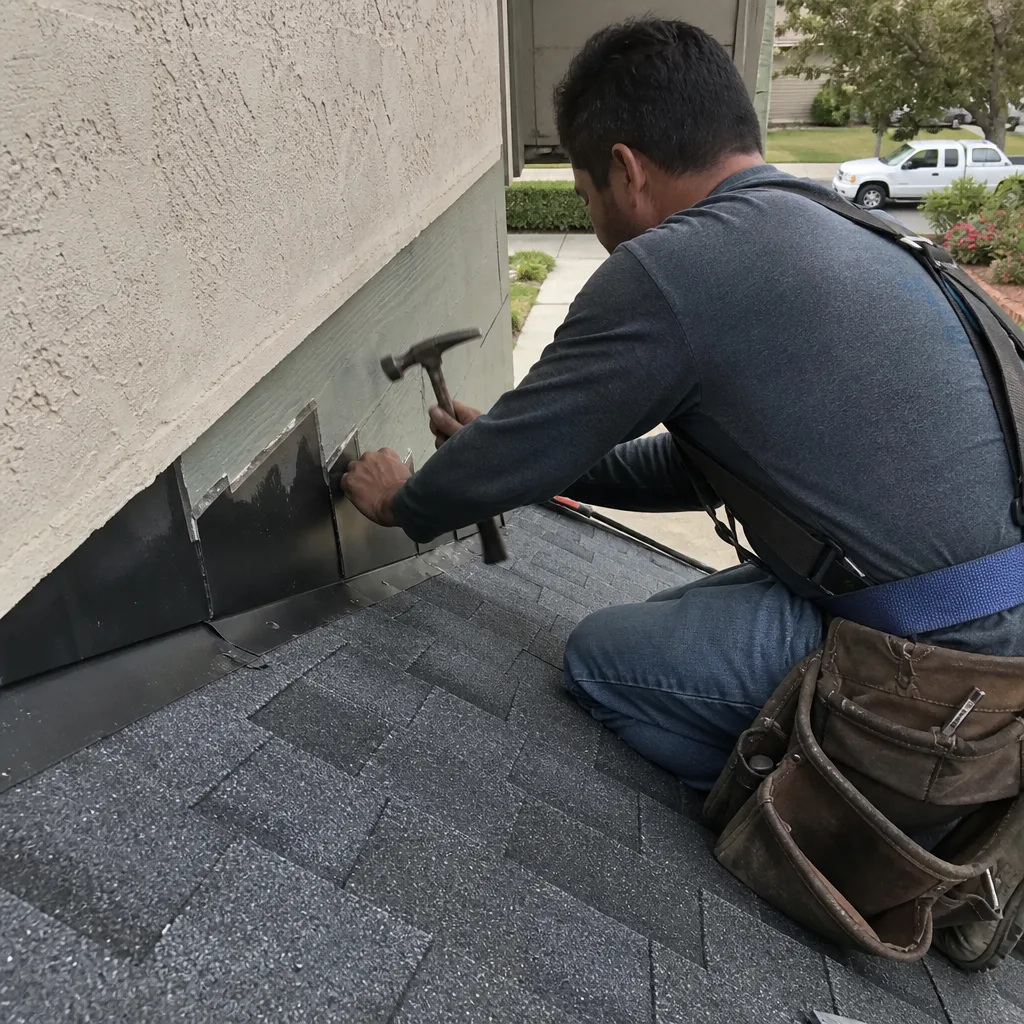
- Water stains on the ceiling below a module seam. This usually means the factory-installed transition flashing has separated from the roof deck, or the butyl tape beneath it has dried out. Santa Clara’s temperature swings, 40°F in January to 95°F in July, accelerate that tape degradation.
- Lifted or wavy membrane edges at the rake or eave. The termination bar has pulled its fasteners, often because the original installer used the wrong fastener length for the sheathing thickness. On Plant Prefab modules, the roof deck is 3/4-inch plywood, not OSB, so a 1-inch fastener is standard.
- Rust streaks running down from standing-seam clips or panel ends. The Kynar finish has been compromised, usually by contact with a dissimilar metal or by abrasion during a prior repair. Once the substrate steel is exposed, rust propagates quickly in marine-influenced air.
- Daylight visible through the ridge cap from inside the attic chase. The ridge vent detail has slipped or the foam closure strip has degraded. This is common on modules with integrated mechanical chases where thermal expansion cycles the components.
- Granule accumulation in gutters or at downspout outlets. If your Plant Prefab module has a shingle overlay rather than standing seam, this indicates advanced asphalt degradation. Most Plant Prefab shingle roofs are architectural-grade with a 25-year rating; in Santa Clara’s sun, we see them reach end of life at 18-22 years.
 Before
 After
AfterReplacement Cost & What’s Included
Our Santa Clara pricing for Plant Prefab roofing work is straightforward and written before any work starts. Roof repairs run $400-$1,800 depending on whether we are replacing a single membrane section, resealing transitions, or installing new standing-seam panels. A full roof replacement on a typical Plant Prefab module runs $8,000-$20,000, with the range driven by finish selection, module access complexity, and whether the existing substrate is salvageable.
| Scope | Price Range | Typical Timeline |
|---|---|---|
| Membrane patch or transition reseal | $400-$900 | Half day |
| Standing-seam panel replacement (up to 4 panels) | $800-$1,800 | 1 day |
| Full membrane replacement, single module | $6,500-$12,000 | 2-3 days |
| Complete standing-seam re-roof, single module | $10,000-$20,000 | 3-5 days |
Every quote includes the part, the labor, the fasteners and sealants specific to your module spec, and disposal of the old material. Under Clause 1 of the Haven Standard, the price is written before anyone starts. Under Clause 3, if it is not done right, we make it right for 365 days. The photo record from your visit, included as standard, shows the condition we found and the work we performed.
DIY or Call Us?
There is a safe middle ground here. A homeowner can walk the perimeter with binoculars, check the gutter outlets for granules, and photograph any lifted edges from the ground. What we do not recommend is ladder work on a Plant Prefab module. The roof pitches vary by design, some sections are 6:12 and others 12:12, and the seam profiles are slick when dew-covered. More critically, stepping on a standing-seam panel between the clip lines will oil-can the metal, creating a new leak path where none existed.
Membrane repair involves heat welding at 600°F and solvent-based primers that require respirator use. Standing-seam panel replacement requires a seaming tool that costs more than most homeowners want to own. The honest assessment: if the repair is small enough to be a true DIY project, it is probably small enough that the diagnostic trip is worth more than the labor savings. Call (669) 259-1843 and we will tell you whether it makes sense to send a crew or whether a tube of compatible sealant and a phone walkthrough will get you through the season.
FAQs
Standing-seam metal roofing on Plant Prefab modules typically lasts 30-40 years in Santa Clara’s climate, while TPO membrane runs 20-25 years and asphalt shingle overlays 18-22 years. The determining factor is usually the coastal marine layer exposure; modules west of El Camino Real see more morning moisture and slightly faster finish degradation. Call (669) 259-1843 for an exact assessment of your module’s condition - estimates are free.
Yes, in most cases. Isolated membrane punctures, separated transition flashings, and individual standing-seam panel damage are all repairable if the substrate is dry and the surrounding components are within their service life. We replace only what failed, document the rest, and flag anything that will need attention in the next 5-10 years. Call (669) 259-1843 to schedule an inspection and written quote.
A standard repair is completed in four to six hours. A full module re-roof takes two to five days depending on finish type and whether the sheathing needs replacement. We work sequentially from one end of the module to the other to maintain weather protection throughout, and we never leave a section exposed overnight. Call (669) 259-1843 to confirm scheduling for your specific module.
We stock the most common failure items: 60-mil TPO membrane in white and tan, Carlisle seam plates and cover strips, 24-gauge standing-seam coil in standard Kynar colors, and the proprietary clip hardware for 2017-2018 modules. Specialty colors or discontinued finishes require a two-day order from our San Jose supplier. When you call (669) 259-1843, we will confirm stock against your serial number before scheduling.
Measure twice, document once, and never assume the last contractor left things square. That is how we have kept projects within a few percent of the written price across 4,000-plus jobs since 2007.
Written by Grant Rowan, Owner, Rowan Construction Group Santa Clara at Rowan Construction Group Santa Clara, serving Santa Clara and nearby areas.