
Free written scope consultation - allowances, timeline, and change-order rules on paper before a single trade is scheduled




Windows & doors


 Before
 After
After Before
 After
After Before
 After
AfterSilestone Roofing: The Santa Clara Owner’s Guide
We stock and install Silestone-compatible roofing components in Santa Clara, with typical repairs running $400-$1,800 and full replacements at $8,000-$20,000 depending on substrate condition and square footage. Most Silestone roofing calls we get in Santa Clara involve either failed membrane seals around valley flashing or cracked composite tiles after the third or fourth dry summer. You’ll usually spot trouble first as water staining on ceiling drywall near the chimney or as a sudden spike in attic humidity during Santa Clara’s winter rains.
Which Silestone Models This Applies To
Silestone roofing isn’t a single product line, it’s a composite tile system manufactured in several profiles. The Santa Clara homes we see most often carry the Silestone Slate-Look (SSL) series or the earlier Silestone Terracotta Composite (STC) line, both produced from roughly 2008 through 2019 before the manufacturer shifted focus to surfacing materials. The SSL series uses a 12-inch by 18-inch interlocking tile with a fiberglass-reinforced polymer base; the STC line runs slightly heavier at 14-inch by 20-inch with a sand-cast texture layer that bonds to the substrate.
To identify your series, check the underside of a loose tile from your ridge line or a gable end. SSL tiles carry a molded date stamp and “SSL” in raised letters near the locking tab. STC tiles show “STC” and a two-digit year code. If your roof was installed by a Santa Clara builder between 2010 and 2016, odds are roughly even between the two. The critical compatibility point is the locking geometry: SSL and STC tiles do not interlock with each other, and we’ve seen Santa Clara homeowners waste money ordering the wrong replacement batch online. We carry both profiles on our trucks, plus the color-matched ridge caps and vent flashing that Silestone specified but many installers substituted with generic parts.
On OEM versus aftermarket: Silestone OEM tiles are no longer in production, so “OEM” now means new-old-stock from distributor warehouses. We source these through three vetted suppliers in Northern California. Where OEM isn’t available, we use a composite tile from a manufacturer whose locking geometry matches within 1/16 inch and whose UV-stabilization rating exceeds the original Silestone spec. We document the substitution in writing before installation, under Clause 1 of the Haven Standard.
Signs Your Silestone Roofing Is Failing
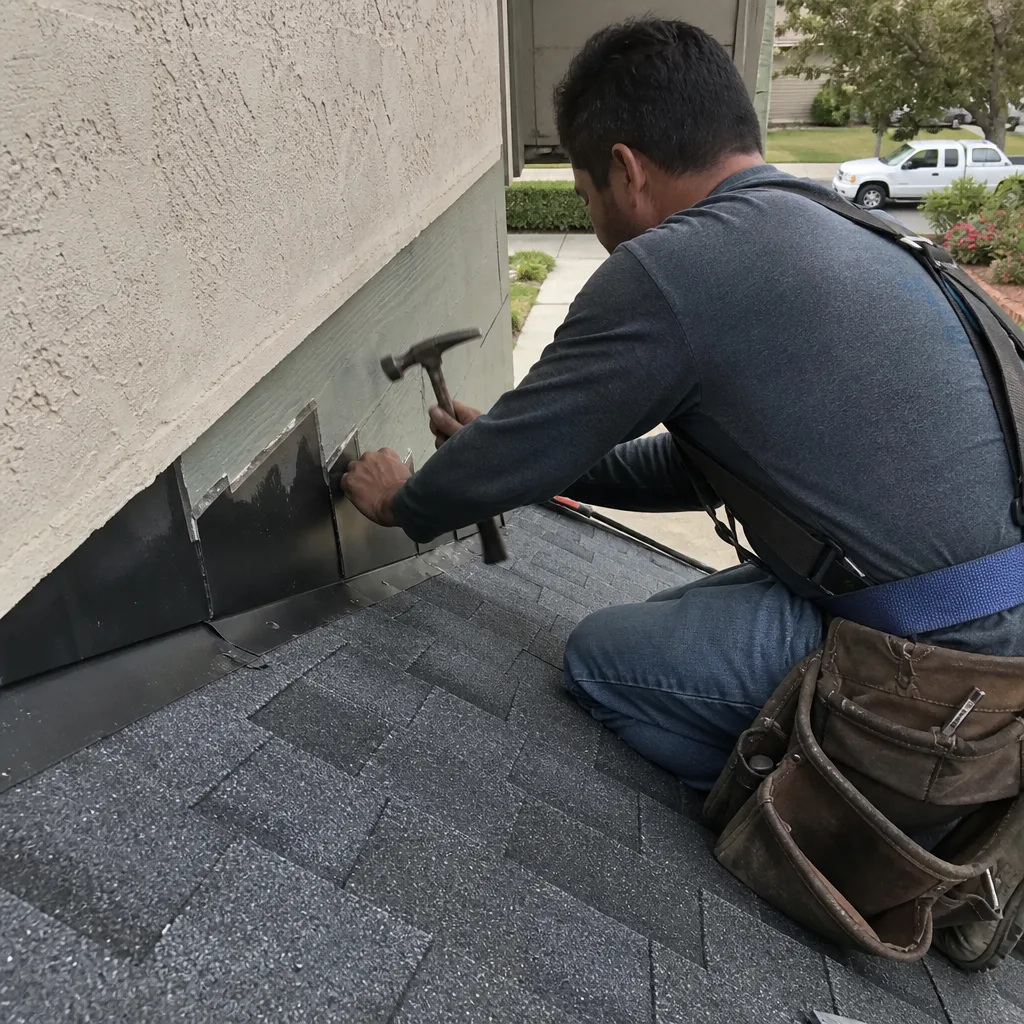
- Cracked or cupped tiles along the south-facing slope. Santa Clara’s 250-plus annual days of sun exposure degrade the polymer binder faster than the manufacturer projected for moderate climates. The tile surface chalks, then micro-cracks, then cups upward as moisture penetrates the fiberglass core. We see this pattern predictably on homes west of El Camino Real where tree cover is lighter.
- Water intrusion at valley intersections after rain. Silestone systems rely on a butyl-rubber membrane beneath the tile at valleys and penetrations. That membrane has a 12-to-15-year service life in Santa Clara’s temperature swing range, shorter if the original installer skimped on overlap width. When it goes, water runs under the tile and into the sheathing before you see interior damage.
- Loose ridge caps that rattle in wind. The Silestone ridge system uses a foam closure strip that compresses over time. Once the compression set exceeds about 30 percent, the mechanical lock loosens and Santa Clara’s spring wind events lift the cap. This is cosmetic until it isn’t; lifted caps admit water directly to the ridge beam.
- Granule accumulation in gutters from composite tiles. Unlike asphalt shingles, Silestone tiles aren’t supposed to shed surface material. If you’re cleaning composite grit from gutters, the UV-degraded surface layer is sloughing off and the structural core is exposed. This accelerates rapidly once it starts.
- Sagging at the eave line visible from the street. Silestone tiles are lighter than clay but heavier than standard asphalt. If the original Santa Clara installer didn’t verify rafter capacity or if the sheathing was underspecified, the cumulative load causes eave deflection. We’ve measured sag on 14-year-old Santa Clara installations that the owners assumed was “settling.”
 Before
 After
AfterReplacement Cost & What’s Included
Here’s what Silestone roofing work costs in Santa Clara, with the numbers we put in writing before any work starts:
| Service | Price Range | Typical Scope |
|---|---|---|
| Single tile replacement (matched) | $400-$800 | Remove damaged tile, inspect substrate, install replacement with compatible sealant, photo document |
| Valley membrane repair (localized) | $600-$1,200 | Remove tiles 18 in. each side of valley, replace membrane, reinstall tiles, verify drainage |
| Ridge cap reset (full roof) | $800-$1,500 | Remove existing caps, replace closure strips, reinstall with mechanical fasteners, seal |
| Partial roof replacement (Silestone) | $3,500-$7,500 | Remove one slope or section, inspect and replace damaged sheathing, install matched composite system |
| Full Silestone roof replacement | $8,000-$20,000 | Complete tear-off, sheathing inspection and replacement as needed, underlayment, composite tile installation, permit, final inspection |
The range driver is almost always substrate condition, not the tiles themselves. Silestone tiles install over solid sheathing, not open rafters, and Santa Clara’s humidity cycles can degrade plywood or OSB from beneath before the tile shows symptoms. We pull a test panel during every estimate and photograph what we find. If sheathing replacement is needed, that’s a separate line item in the written quote, not a surprise mid-project. Our 365-Day Done Right Promise covers the workmanship; material warranties run through the manufacturer or our vetted supplier, and we document which applies before we start.
DIY or Call Us?
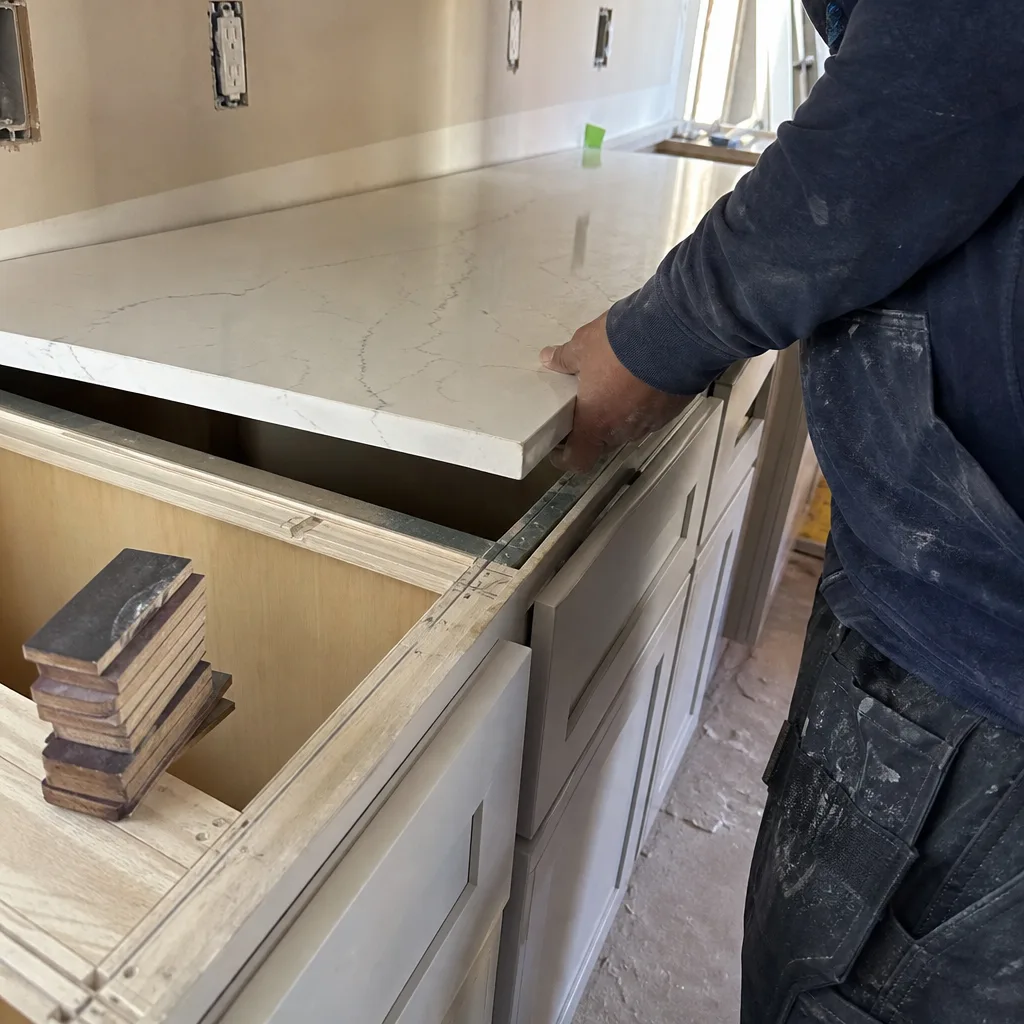
There’s a safe middle ground here, and then there’s the point where you need a crew.
What you can check safely from a ladder or the ground: count cracked or missing tiles from a visual inspection, note the locations, and check your gutters for composite grit. Photograph anything suspicious. If you have attic access, look for daylight at ridge or valley lines, and check for staining on the underside of sheathing. That’s all useful intelligence, and we welcome the photos when you call.
What you should not attempt: walking a Silestone roof to replace tiles yourself. The composite surface is more slippery than asphalt when dusty, which in Santa Clara means most of the year. More critically, the interlocking design requires a specific release motion to avoid cracking adjacent tiles, and the membrane work beneath requires removing multiple courses without damaging the surrounding field. We’ve been called to Santa Clara homes where a well-intentioned owner cracked six tiles fixing one, then compromised the valley seal trying to reach the cracked ones. Under Clause 1, our price covers the repair plus the documentation of what we found and what we did. Call (669) 259-1843 and we’ll schedule a free estimate with a written quote before any work starts.
FAQs
The original manufacturer projected 30 years for the SSL series and 25 for STC, but Santa Clara’s UV exposure and thermal cycling typically yield 15 to 20 years for SSL and 12 to 16 for STC before significant tile replacement is needed. The membrane layer beneath is the earlier failure point, usually 10 to 14 years. Call (669) 259-1843 for an exact assessment of your roof’s condition - estimates are free.
Localized failure can be repaired if the substrate is sound and the tile profile is still available. We replace individual tiles, reset ridge systems, and re-membrane valleys as standalone jobs. Full replacement becomes necessary when tile degradation is widespread, when the substrate is compromised, or when the specific profile is no longer matchable. We give you both options in writing if both are viable. Call (669) 259-1843 for a free estimate.
A single tile or small patch typically takes two to four hours on site, including substrate inspection and photo documentation. Valley membrane work runs four to six hours. Full slope or roof replacement depends on square footage and sheathing condition, but most Santa Clara Silestone replacements we complete in three to five working days, permit to final inspection. Call (669) 259-1843 to schedule your free estimate.
We carry both SSL and STC profile tiles, matching ridge caps, valley membrane, and specified fasteners on our trucks serving Santa Clara. For color-matched work, we maintain a reference library of Santa Clara installations by year and builder, which helps us source the closest available composite when exact color lots are exhausted. Call (669) 259-1843 - if we don’t have it on the truck, we’ll have it within 48 hours for most Santa Clara addresses.
Rowan Construction Group Santa Clara is an independent service provider, not affiliated with Silestone. We also stock parts for KraftMaid, Cambria, and Kohler systems across our seven trades.
Measure twice, document once, and never assume the last contractor left things square. That’s how we approach every Silestone roofing call in Santa Clara, from a single cracked tile to a full replacement. If you’re seeing symptoms or just want the condition documented before the next rain, call (669) 259-1843. We’ll deliver a written price before any work starts, every time, backed by the Haven Standard and our 365-Day Done Right Promise.
Written by Grant Rowan, Owner, Rowan Construction Group Santa Clara at Rowan Construction Group Santa Clara, serving Santa Clara and nearby areas.