
Last updated September 24, 2026
Free written scope consultation - allowances, timeline, and change-order rules on paper before a single trade is scheduled




Windows & doors


 Before
 After
After Before
 After
After Before
 After
AfterHow to Hire a Construction Contractor in Santa Clara: A Step-by-Step Guide
California’s Contractors State License Board logged over 17,000 complaints against contractors in a recent 12-month period, and the majority involved projects where the scope of work was never written down in enforceable language. In Santa Clara, where a kitchen remodel on a 1960s Eichler can run $85,000 and an ADU addition crosses $200,000 before fixtures, a vague contract isn’t an inconvenience. It’s a financial exposure that compounds with every change order.
This complete guide to construction in Santa Clara shows you how to read the documents a contractor produces before any bid is submitted. The written record generated during the estimate phase, we’ve found across 4,000-plus projects, tells you more about how a crew will behave on-site than any reference call.
Quick Answer
Hiring a construction contractor in Santa Clara requires verifying an active CSLB license and bond, reviewing three written estimates with line-item scopes naming brands and finishes, and signing a contract with five protective clauses: written change orders, milestone-based payments, lien waivers, permit responsibility, and dispute resolution. The contractor who documents thoroughly before work starts is the one who finishes within a few percent of the agreed price.
Table of Contents
- How to Verify License, Bond, and Insurance in California
- The Five Contract Clauses That Separate Professionals from Risk
- What a Detailed Scope of Work Looks Like (Side by Side)
- How to Read and Compare Written Estimates
- Why the Lowest Bid Usually Costs More
- Permits, Inspections, and Who Pulls Them
- Red Flags Specific to the Santa Clara Market
- Common Mistakes to Avoid
- When to Call a Professional
- Frequently Asked Questions
 Before
 After
AfterHow to Verify License, Bond, and Insurance in California
Every legitimate construction contractor in Santa Clara must carry an active license from the California Contractors State License Board (CSLB). The lookup takes 90 seconds and reveals more than most homeowners realize.
Step 1: Run the CSLB License Check
Go to www.cslb.ca.gov/OnlineServices/CheckLicenseII/ and enter the six- or seven-digit license number. The results page shows four fields that matter:
- License Status: Must read “Active.” “Inactive” means the contractor cannot legally bid or perform work.
- Classification: The C-36 Plumbing or B-General Building designation must match the work being performed. A C-10 Electrical contractor cannot legally manage your full kitchen remodel in Santa Clara.
- Workers’ Compensation: If the contractor has employees, this field must show coverage. In California, uninsured workers on your property create direct liability for the homeowner if injury occurs.
- Bond: The $25,000 contractor’s bond must be current. This is your recovery mechanism if the contractor abandons the job or damages your property.
Step 2: Request and Read the Certificates
Ask for a Certificate of Insurance (COI) naming you as additional insured, and a copy of the bond certificate. Check that the policy dates cover your project timeline. We’ve seen contractors in the Santa Clara Valley present expired COIs from policies that lapsed the previous quarter.
Step 3: Cross-Check Complaint History
The CSLB lookup includes a “Complaint Disclosure” section. One or two resolved complaints over a decade is normal for an active contractor. A pattern of recent complaints, or any pending disciplinary action, is disqualifying.
In Santa Clara specifically, check whether the contractor has worked in your neighborhood’s building era. A contractor familiar with 1950s concrete slab foundations in the Old Quad, or the specific seismic retrofit requirements for 1970s ranch homes in Rivermark, will write a more accurate scope than one bidding blind from San Jose.
The Five Contract Clauses That Separate Professionals from Risk

The contract is where most homeowners stop reading. This is a mistake. The five clauses below distinguish contractors who finish within budget from those who generate revenue through post-signing changes.
Clause 1: Written Change Order Requirement
The contract must state that no additional work proceeds without a signed change order specifying the scope change and price adjustment. Under The Haven Standard, this is Clause 1 for a reason. We’ve kept projects within a few percent of the agreed price across 4,000-plus jobs because no crew member, including Grant Rowan, can authorize extra work without a customer signature.
A contractor who says “we’ll figure it out as we go” or “I’ll just bill you at the end” is describing a project that will exceed budget. The change order discipline is what Haven acquired Rowan for, and it’s the administrative practice that protects your number.
Clause 2: Milestone-Based Payment Schedule
Never agree to a large upfront deposit with vague progress triggers. A professional contract structures payments to completed milestones:
- 10-15% at contract signing
- 25% at rough-in inspection pass
- 25% at drywall or equivalent mid-point
- 25% at final inspection
- 10-15% retainage at substantial completion, released after punch list
In Santa Clara, where permit inspections for ADUs and additions can take 2-3 weeks between trades, seasonal construction care for Santa Clara means the payment schedule should align with inspection sign-offs, not calendar dates.
Clause 3: Lien Waiver Process
California mechanics’ liens allow subcontractors and suppliers to file against your property if the general contractor fails to pay them. Your contract must require conditional lien waivers from every tier with each payment, and final unconditional waivers before final payment. The contractor who cannot explain this process in two sentences does not manage it on their jobs.
Clause 4: Permit Responsibility
The contract must name who pulls permits, schedules inspections, and pays permit fees. In California, the licensed contractor is legally responsible for permit compliance. A contract that asks the homeowner to pull their own permit is a red flag we address in detail below.
Clause 5: Dispute Resolution
The contract should specify binding arbitration or mediation before litigation, with venue in Santa Clara County. This keeps disputes local and manageable rather than dragging into superior court.
What a Detailed Scope of Work Looks Like (Side by Side)
The scope of work is the document that defines what you’re buying. Most disputes arise not from malice but from two parties reading different expectations into the same vague phrase.
Vague Scope (High Risk)
- “Install new kitchen cabinets”
- “Replace countertops”
- “Update lighting”
- “New flooring as selected”
Detailed Scope (Professional)
- “Remove and dispose of existing cabinets; install KraftMaid Vantage Series semi-custom cabinets, Cherry in Kaffe finish, soft-close hinges and drawer glides, 36″ wall cabinets to ceiling with crown molding, per attached cabinet layout drawing dated [date]”
- “Remove existing laminate countertops; template, fabricate, and install Cambria Brittanicca quartz countertops, 3cm thickness, eased edge profile, including undermount sink cutout and faucet holes, with silicone seal to backsplash”
- “Remove existing recessed cans; install new LED recessed lighting, 6″ Halo H750ICAT airtight housings with 90-CRI retrofit modules, dimmable, Lutron Diva dimmers, per electrical plan”
- “Remove existing vinyl sheet flooring; install Coretec Pro Plus XL Enhanced vinyl plank, 7″ x 48″, color ‘Haven Oak,’ floating installation with 1.5mm attached underlayment, including quarter-round at baseboards”
The detailed scope names the manufacturer, the product line, the finish, and the installation method. It references attached drawings. It is enforceable. If the contractor installs a different cabinet line or a thinner countertop, the scope document supports a demand for correction.
At Kitchen Remodeling in Santa Clara, we deliver this level of specification in every written quote before any work starts. The quote is a flat price with a written scope and a written warranty. “Call for a quote” is not an option here.
How to Read and Compare Written Estimates
Most Santa Clara homeowners collect three estimates. Few know how to read them against each other. Here’s the method.
Step 1: Normalize the Format
If one estimate is a single-page lump sum and another is eight pages of line items, you’re not comparing equivalent documents. Request that each contractor break their bid into the same categories:
- Demolition and disposal
- Rough carpentry / framing
- Plumbing rough and finish
- Electrical rough and finish
- HVAC modifications (if applicable)
- Insulation and drywall
- Flooring
- Cabinets and countertops
- Fixtures and appliances (owner-supplied or contractor-supplied)
- Painting and finish carpentry
- Permits and fees
- Project management and overhead
Step 2: Check for Omissions, Not Just Prices
The estimate that seems lowest often simply omits work the others include. Common omissions in Santa Clara estimates:
- Permit fees (can run $3,000-$8,000 for a home addition)
- Dumpster and debris hauling (required for most remodels; Santa Clara County has specific disposal requirements for construction waste)
- Temporary power or water relocation during construction
- Protection of existing finishes not being replaced
- Final cleaning
Step 3: Verify Allowances
An “allowance” is a placeholder dollar amount for selections not yet made. A $5,000 tile allowance sounds generous until you select $12 per square foot handmade tile for a 400 square foot bathroom. Professional estimates specify allowance amounts and note that overages are change orders. Vague estimates treat allowances as hidden escalation mechanisms.
We provide written line-item quotes with fixed pricing. The number on the page is the number you can screenshot and compare. If you bring a competitor’s written estimate, we offer a Free Second Opinion and will review it line by line at no charge.
Why the Lowest Bid Usually Costs More
The lowest bid in a competitive set is frequently the one that escalates most. This is not coincidence. It is structural.
The Underbid Math
A contractor who underbids by 15% to win the job faces a choice: absorb the loss (bankrupting), cut corners (risking callback and reputation), or recover through change orders. The third option is the industry norm. The contractor knows which scope items were underpriced and which “unforeseen conditions” will emerge once work starts.
In Santa Clara’s older neighborhoods, like the Eichler tracts near Kiely Boulevard or the 1960s ranch homes off El Camino Real, “unforeseen” conditions are often foreseeable to an experienced eye: galvanized plumbing at end of life, ungrounded electrical panels, inadequate attic insulation for current Title 24 energy codes. The contractor who omits these from the base scope knows they will surface. They become change orders at premium pricing.
The Change Order Revenue Model
A contractor with a 20% gross margin on the base contract can achieve 35% effective margin by generating 30% of project revenue in change orders priced at 50% margin. The homeowner, already committed and partially paid, has limited leverage to negotiate. The contract without a written change order requirement enables this model.
Under The Haven Standard, no work proceeds on a change until the change order is signed. This discipline, maintained since 2007, is why our projects finish within a few percent of the agreed price. The administrative cost of running change orders properly is high. The contractor unwilling to bear that cost is betting on your inattention.
Permits, Inspections, and Who Pulls Them
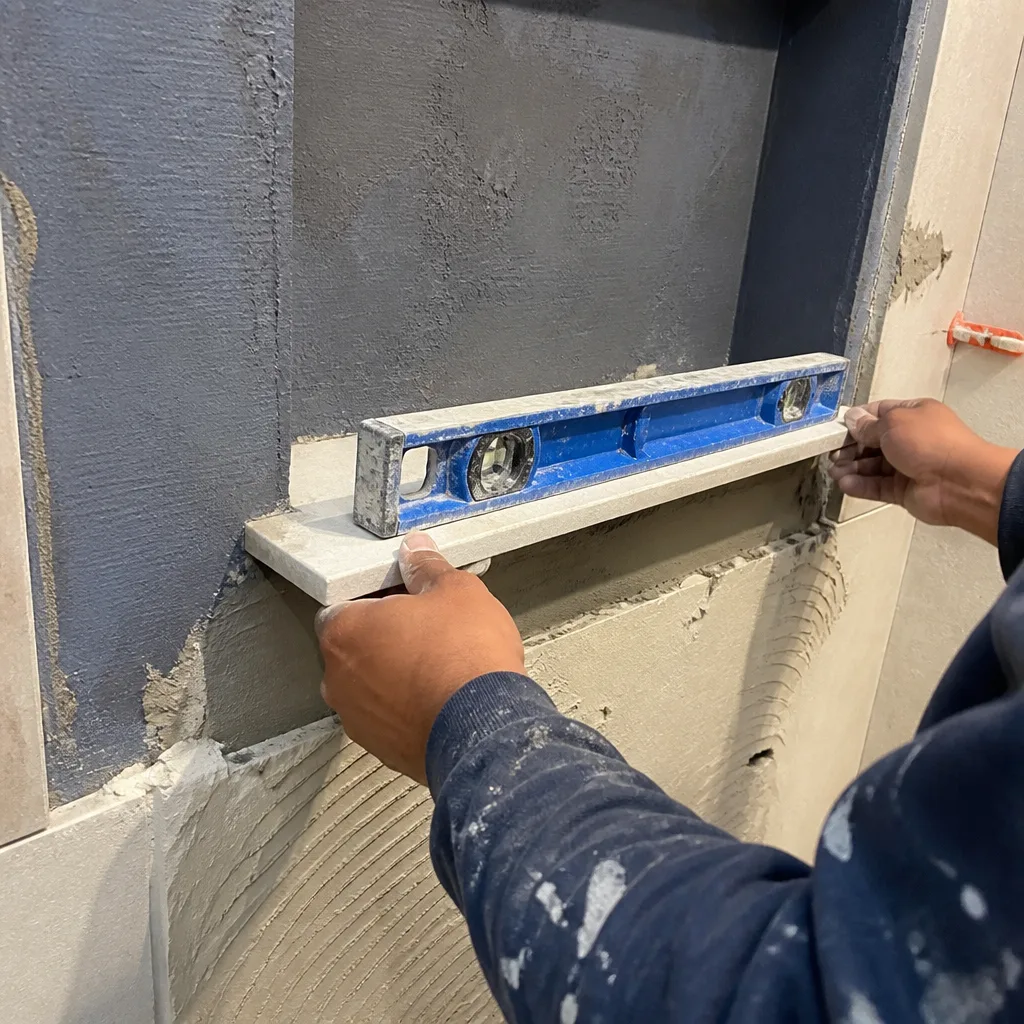
Permit law in California is clear: the licensed contractor performing the work is responsible for permit compliance. A contractor who asks the homeowner to pull their own permit is transferring legal liability and often concealing that they cannot obtain permits due to license issues, expired insurance, or outstanding CSLB complaints.
What Pulling Your Own Permit Means
If you pull an Owner-Builder permit, you become the contractor of record. You assume liability for code compliance, worker safety, and structural adequacy. Your homeowner’s insurance may not cover construction-related claims under an owner-builder scenario. And you cannot legally hire an unlicensed contractor to work under your permit.
The Professional Process
A legitimate contractor in Santa Clara will:
- Prepare permit drawings (or engage an architect/engineer for structural plans)
- Submit to the City of Santa Clara Building Division with permit fees
- Schedule and attend all required inspections
- Obtain the Certificate of Occupancy or final inspection approval before requesting final payment
The City of Santa Clara requires inspections at foundation, rough framing, rough electrical/plumbing/HVAC, insulation, drywall, and final. For ADUs, additional fire separation and egress inspections apply. A contractor who cannot articulate this sequence has not managed many permitted projects.
At Rowan Construction Group Santa Clara home, we pull permits as standard practice on every trade, from Bathroom Remodeling in Santa Clara to full home additions. The permit record becomes part of your property’s documented history, protecting resale value and insurance coverage.
Red Flags Specific to the Santa Clara Market
Santa Clara’s housing stock, permit environment, and contractor market create specific warning signs.
Red Flag 1: No Familiarity with Local Building Eras
A contractor who cannot identify whether your home is slab-on-grade or raised foundation, or who has not worked with Eichler at-grade radiant heating, has not worked in Santa Clara. The soil conditions in the Santa Clara Valley, with expansive clay in some areas and high water table near the Guadalupe River corridor, affect foundation and drainage specifications. Generic bids ignore these factors.
Red Flag 2: Pressure to Start Before Permit Approval
Starting construction before permit issuance exposes the homeowner to stop-work orders, doubled permit fees, and potential demolition of unpermitted work. Any contractor who suggests “we can get started while the permit is processing” is describing an illegal practice.
Red Flag 3: Vague or Missing Warranty Language
California requires a one-year implied warranty on construction work. Professional contractors exceed this. Our 365-Day Done Right Promise, printed on every page and backed by a terms page, not an asterisk, states: if it is not done right, Rowan makes it right. A warranty referenced only verbally or in fine print is not a warranty.
Red Flag 4: No Documented Photo Record
Every visit to your property should generate evidence. We include a documented photo record as standard, not an upgrade. The customer leaves with images of what was found and what was done. A contractor who cannot describe their documentation process is not documenting.
Red Flag 5: Inability to Name Material Brands
A contractor who specifies “tile backer board” rather than “Schluter-Kerdi waterproofing membrane” or “cabinets” rather than “Wellborn Forest Series” is either uninformed or concealing low-grade material allowances. Our sourcing depth across fifty-plus vetted brands, including KraftMaid and Wellborn cabinets, Cambria and Caesarstone countertops, GAF and Owens Corning roofing, gives the written quote honest numbers rather than inflated ones.
Common Mistakes to Avoid
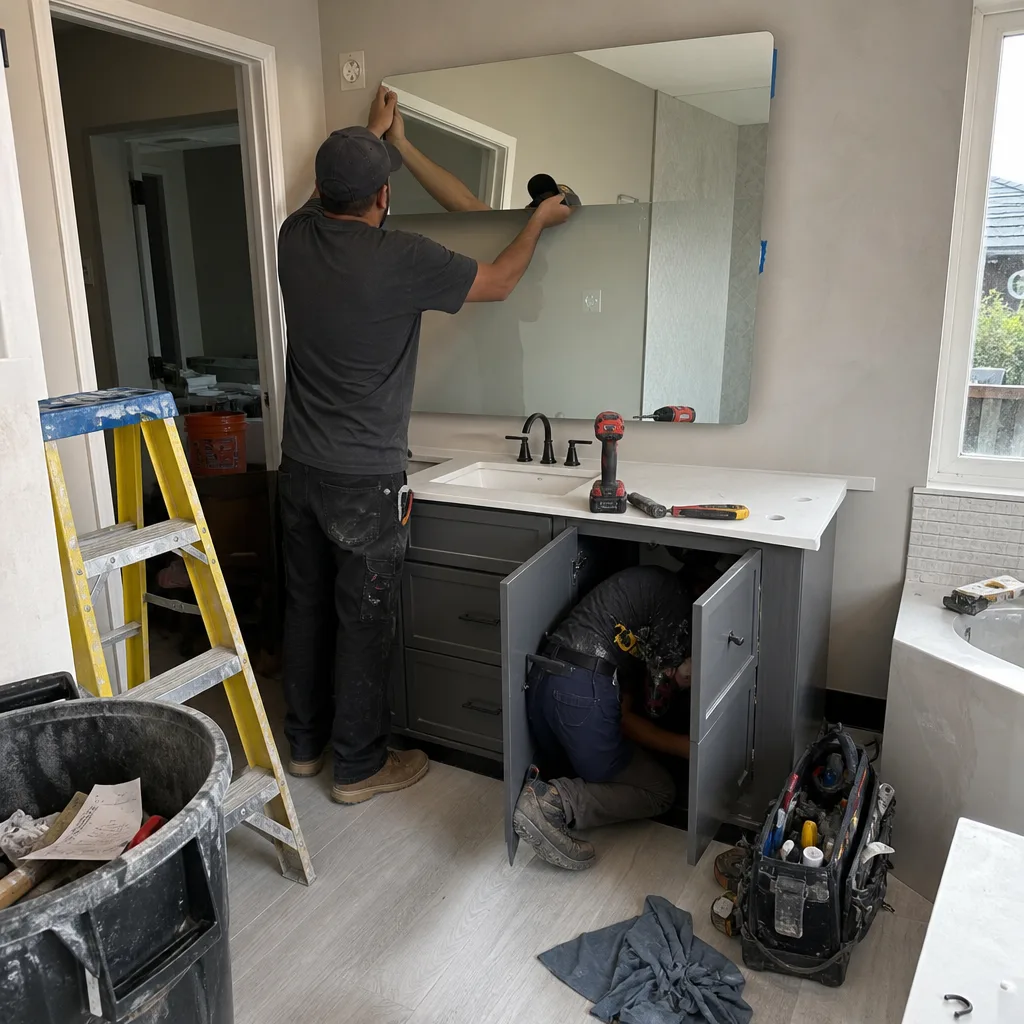
- Skipping the CSLB lookup because the contractor “seems nice.” Personality is not a credential. The license check takes 90 seconds and has exposed inactive licenses on contractors who presented professionally.
- Accepting a verbal estimate or handshake agreement. In California, home improvement contracts over $500 must be in writing. A contractor who resists written documentation is planning to resist accountability.
- Paying more than 10% or $1,000 deposit (whichever is less) without a signed contract. California law limits upfront payment. Contractors who demand more are either undercapitalized or planning to use your funds to finish someone else’s job.
- Not verifying that the specific crew is background-checked. Some contractors subcontract everything to unvetted day labor. We background-check and uniform every technician before they arrive at a Santa Clara home.
- Ignoring the Santa Clara climate in material selection. The South Bay’s thermal cycling, with 40-degree winter lows and 90-degree summer highs, stresses exterior materials. A contractor specifying the same roofing or paver system for Santa Clara as for coastal Pacifica has not adjusted for local conditions.
- Failing to get lien waivers with each payment. Without documented waivers, you remain exposed to mechanics’ liens even after paying the general contractor in full.
- Choosing based on the lowest bid without reading the scope. The lowest bid with the narrowest scope is the most expensive project, every time.
When to Call a Professional
Call a licensed construction contractor when the project involves structural modification, electrical or plumbing relocation, permit requirements, or costs exceeding $5,000. In Santa Clara, this describes most kitchen and bathroom remodels, all ADUs and home additions, roofing replacements, and window installations in homes built before 1990.
Rowan Construction Group Santa Clara offers free estimates in Santa Clara, with more guides & resources available on our blog. Every estimate includes a written flat price, detailed scope naming brands and finishes, and our documented photo record. Call (669) 259-1843 to schedule yours. Grant Rowan or a member of our team will review your project, inspect existing conditions, and deliver a quote you can compare line by line against any competitor.
Frequently Asked Questions
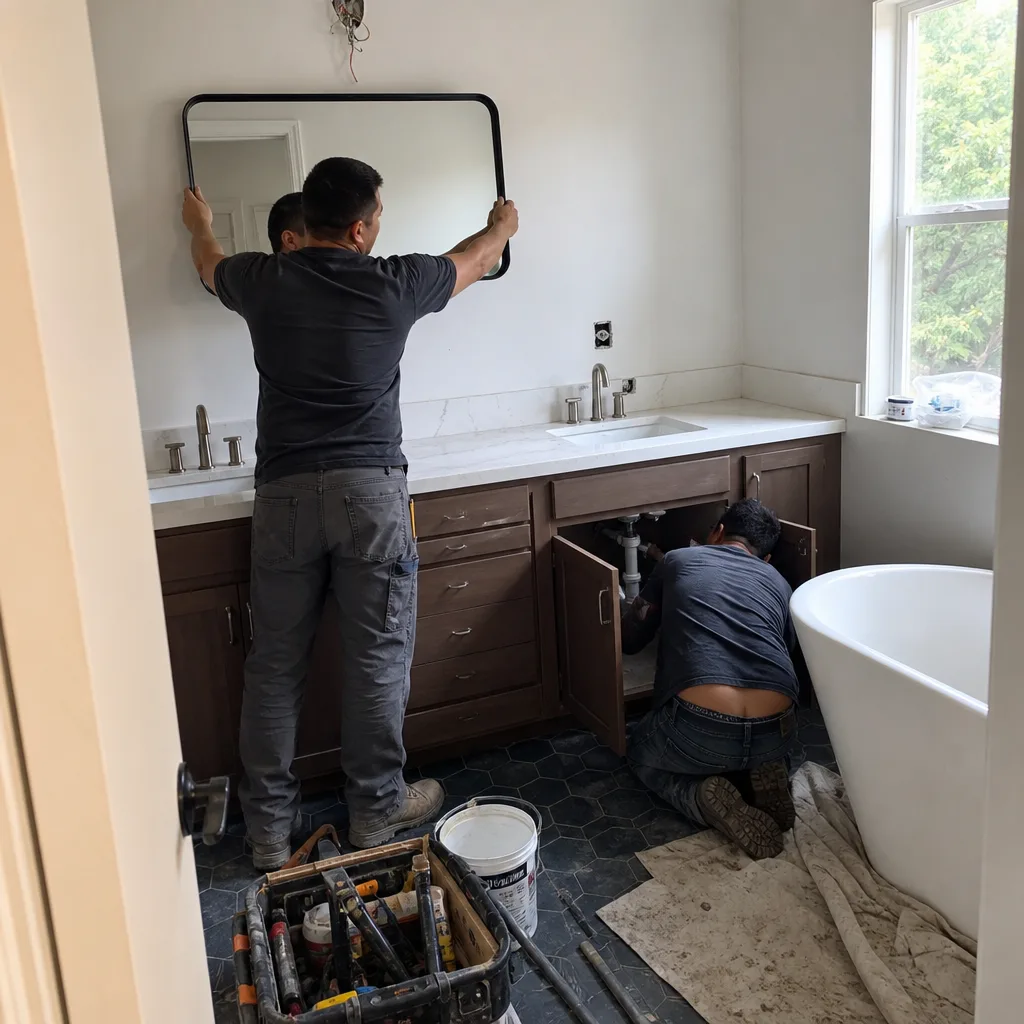
Kitchen remodels in Santa Clara typically range from $75,000 to $150,000 for full renovations of 150-250 square foot spaces; bathroom remodels run $35,000 to $75,000; home additions and ADUs start around $200,000 and scale with square footage and finish level. Roofing replacements on typical Santa Clara single-family homes range $18,000 to $35,000 depending on pitch, layer count, and material. Call (669) 259-1843 for an exact quote on your specific project - estimates are free.
Visit www.cslb.ca.gov/OnlineServices/CheckLicenseII/ and enter the six- or seven-digit license number. Verify the status reads “Active,” the classification matches your project type, workers’ compensation coverage is current if employees exist, and the bond is valid. The lookup also shows complaint history and any pending disciplinary action.
A California home improvement contract must include the contractor’s license number, start and completion dates, payment schedule, description of work and materials, notice of cancellation rights, and mechanics’ lien warning. Beyond legal minimums, professional contracts add written change order requirements, milestone-based payments, lien waiver processes, permit responsibility clauses, and dispute resolution provisions.
It is legal but highly inadvisable. When you pull an Owner-Builder permit, you assume all contractor liability for code compliance, worker safety, and structural adequacy. A licensed contractor who asks you to do this is often concealing license or insurance issues. Professional contractors pull permits as standard practice and include the cost in their written quote.
The lowest estimate typically omits scope items included in higher bids, uses inferior materials without disclosure, or plans to recover margin through change orders once work is underway. Normalize estimates by requesting identical line-item categories, then check for omissions in permits, disposal, temporary utilities, and protection of existing finishes before comparing bottom lines.
California law provides a one-year implied warranty on construction work. Professional contractors exceed this with explicit written warranties. Our 365-Day Done Right Promise states that if it is not done right, Rowan makes it right, backed by The Haven Standard terms page. Document all concerns in writing with photos, request inspection, and reference your contract’s warranty and dispute resolution clauses.
The Bottom Line
Hiring a construction contractor in Santa Clara is a document-reading exercise before it is a price comparison. The CSLB license check, the five contract clauses, the detailed scope of work, and the permit responsibility language tell you how the contractor will behave when problems arise. The contractor who documents thoroughly before work starts, who names brands and finishes in writing, and who structures payments to milestones rather than calendar dates is the contractor who finishes within budget.
We’ve operated under these disciplines since 2007, across 4,000-plus projects, because they produce predictable outcomes. The written price before any work starts. The signed change order before any scope change. The documented photo record on every visit. These are not marketing claims. They are the administrative practices that keep projects within a few percent of the agreed number.
Call (669) 259-1843 to schedule your free estimate. We’ll deliver a written quote you can screenshot, compare, and keep.
Written by Grant Rowan, Owner at Rowan Construction Group Santa Clara, serving Santa Clara since 2007.