
Last updated September 24, 2026
Free written scope consultation - allowances, timeline, and change-order rules on paper before a single trade is scheduled




Windows & doors


 Before
 After
After Before
 After
After Before
 After
AfterSeasonal Construction Care for Santa Clara: Year-Round Homeowner’s Guide
Santa Clara averages only 15 inches of rain per year, but 80% of it falls between November and March. That means a single missed caulk inspection in October can allow five months of continuous moisture intrusion before the dry season reveals swollen trim, compromised sheathing, or slab-edge spalling. In our experience across 4,000-plus projects, the most expensive repairs in Santa Clara homes trace back to maintenance skipped during the October window or the June heat buildup. This guide maps each month to the specific stress Santa Clara’s climate applies to your home’s envelope, structure, and systems, with tasks assigned by what a homeowner can safely document versus what requires a licensed contractor - for The Complete Guide to Construction in Santa Clara.
Quick Answer
Seasonal construction care in Santa Clara means preparing for concentrated winter rain (November through March), managing summer thermal expansion above 95°F, and addressing seismic vulnerabilities during the accessible spring months. The critical tasks are: October perimeter drainage and expansion-joint inspection, June composite and asphalt surface evaluation, and April crawl-space anchor-bolt and cripple-wall checks tied to California’s seismic zones. A written maintenance record with photos protects warranty coverage and resale value.
Table of Contents
- The October Window: Pre-Rain Preparation
- Winter Rain Intrusion: November Through March
- Spring Seismic Readiness: April and May
- Summer Thermal Expansion: June Through September
- Fall Dry-Heat Stress: September and October
- HVAC Filter Intervals for Santa Clara’s Air Quality
- What You Can Do vs. What Requires a Licensed Contractor
- Building Your Maintenance Record
 Before
 After
AfterThe October Window: Pre-Rain Preparation
The two weeks before Santa Clara’s first sustained rain - typically the third week of October - are the most consequential maintenance window of the year. Soil moisture around slab-on-grade foundations shifts from summer contraction to winter expansion, and stucco systems face their first real hydrostatic test. We schedule more exterior envelope inspections in October than any other month.
Expansion joints in stucco and siding. Santa Clara’s clay-heavy soils expand and contract significantly with moisture change. That movement transmits through the foundation to the wall plane. Stucco systems rely on control joints - typically spaced 144 inches on center per ASTM C926 - to fracture predictably rather than randomly. A control joint that has filled with paint, caulk, or debris cannot move. The result is a spiderweb crack pattern that channels water behind the lath. Inspect vertical joints at inside corners, horizontal joints at floor lines in multi-story construction, and any joint that crosses a dissimilar material (stucco to wood trim, stucco to concrete foundation). The joint should show clean separation with backer rod visible and elastomeric sealant that flexes when pressed with a fingernail. If it’s rigid or painted shut, it needs cutting and resealing. A C-29 masonry contractor or C-35 lathing and plastering contractor handles this; DIY removal of old sealant risks scoring the weather-resistant barrier beneath.
Downspout extensions and splash blocks. Santa Clara’s municipal code requires roof drainage to discharge at least 18 inches from the foundation, but the critical detail is where that water goes next. Slab-on-grade homes in neighborhoods like Rivermark and Northside Santa Clara sit on soils with moderate to high expansion potential. A downspout dumping against the slab edge creates a moisture differential - wet on the exterior, conditioned dry on the interior - that drives vapor through the slab and into base plates. Check that extensions carry water to a swale, street gutter, or dry well. In Santa Clara’s flat terrain, positive slope away from the foundation is often 1/8 inch per foot or less; any obstruction (mulch buildup, settled grade, hardscape edging) can reverse it. This is homeowner-documentable: photograph the discharge point with a level showing positive slope.
Slab-on-grade perimeter drainage. Santa Clara’s pre-1980 housing stock often lacks a capillary break between footing and stem wall, and some parcels in the older central neighborhoods still have original site drainage that predates modern backfill standards. Walk the perimeter after a test irrigation cycle or early-season rain. Puddling that persists more than four hours indicates inadequate drainage. The repair - installing a perimeter drain to daylight or storm connection - is C-36 plumbing work if it ties to municipal systems, or C-12 earthwork if it’s a gravity daylight drain. Either way, it requires excavation and inspection.
Window and door sealant. Santa Clara’s temperature swing from October lows in the 50s to summer highs above 95°F puts polyurethane sealants through approximately 100 thermal cycles annually. A sealant installed five years ago has likely exceeded its movement accommodation. Check the exterior perimeter of every window and door for cohesion loss - the sealant pulling away from one substrate - or adhesive failure - the sealant splitting internally. Windows and Doors in Santa Clara face this stress directly; replacement sealant must meet ASTM C920 Class 25 for the joint width anticipated.
Winter Rain Intrusion: November Through March
Once the pattern establishes, Santa Clara sees 25 to 30 days with measurable precipitation, concentrated in atmospheric river events that drop 1 to 3 inches in 24 hours. The damage mechanism is not total rainfall volume but intensity against compromised envelope details.
Roof system monitoring. Asphalt shingle warranties - GAF and Owens Corning both specify this - require that the roof be “adequately ventilated” and “properly maintained” for coverage to remain valid. Winter is when inadequate ventilation reveals itself as condensation staining on the underside of roof sheathing. After a heavy rain, access the attic through the hatch (wear a respirator; Santa Clara’s older attics may have vermiculite insulation). Look for:
- Water staining that tracks with rafters (indicates a leak) versus staining that appears on the sheathing between rafters (indicates condensation from inadequate exhaust ventilation).
- Shingle debris in gutters, which signals granule loss and accelerated wear.
- Daylight visible around chimney saddles, pipe penetrations, or valley flashings.
Any of these findings warrant a Roofing in Santa Clara inspection by a C-39 roofing contractor. The 365-Day Done Right Promise applies: if we inspect and miss something, we make it right.
Exterior wall moisture indicators. Stucco that has taken water shows efflorescence - white powdery salt deposits - at the base of walls or around penetrations. Wood siding shows raised grain, then cupping, then fungal staining. In Santa Clara’s mild winters, fungal growth proceeds slowly but continuously; by March, a colony established in October has had five months to colonize sheathing. The threshold for professional intervention is any softening of substrate behind the finish. Probe with an awl at the base of walls, around hose bibs, and below windowsills. Resistance should be firm. If the awl penetrates more than 1/4 inch, the sheathing is compromised and the repair is C-5 framing or C-35 lathing work.
Foundation perimeter observation. After each significant storm, walk the interior slab perimeter with bare feet or a thermal camera if available. Santa Clara’s winter groundwater can rise in clay soils and create evaporative cooling at the slab edge - a 5°F temperature differential is detectable and indicates moisture migration. Document with photos; if the pattern persists through multiple storms, a C-36 plumber can evaluate perimeter drainage and a C-61/D-49 moisture control specialist can assess vapor barrier integrity.
Spring Seismic Readiness: April and May
Santa Clara sits in California’s highest seismic design category, with ground motion parameters that governed pre-2000 construction under UBC-97 and earlier codes. Spring, before crawl spaces become uncomfortably hot, is the practical season for structural inspection.
Crawl space access and anchor bolt inspection. The sill plate - the horizontal framing member that connects the wood structure to the concrete foundation - is secured by anchor bolts embedded in the foundation and extending through the plate. In homes built before the 1997 Uniform Building Code adoption in Santa Clara County, bolt spacing was often 6 feet on center rather than the current 4 to 6 feet depending on story height, and bolts were frequently misplaced during concrete pour and omitted rather than relocated. Spring is when to verify:
- That every bolt has a nut and washer, and that the nut is tight (torque to 25 ft-lbs minimum; a contractor’s wrench or calibrated impact driver is required for accurate measurement).
- That the sill plate is not split around the bolt, which indicates over-tightening or wood decay.
- That there is no gap between sill plate and foundation - any daylight visible indicates either bolt stretch or plate lift from seismic movement or moisture swelling.
Anchor bolt retrofit, including epoxy-set bolts where original bolts are missing or inadequate, is C-5 carpentry and structural work requiring a building permit in Santa Clara; see Construction Permits, Codes & Inspections in CA: What You Need to Know. The city’s Building Division requires engineered plans for retrofits in certain historic districts and for homes with cripple walls exceeding 48 inches in height.
Cripple wall bracing. A cripple wall is the short wood-framed wall between the foundation and the first floor, common in Santa Clara’s 1950s through 1980s ranch and split-level stock. Unbraced cripple walls rack diagonally during seismic shaking, leading to catastrophic collapse. The standard retrofit - plywood shear panels, hold-downs at corners, and continuous tie-down to the floor framing - is specifically what Santa Clara’s seismic ordinance addresses. Spring inspection checks for:
- Existing plywood that has delaminated or been compromised by plumbing or electrical penetrations.
- Studs that show compression crushing at the sole plate, indicating past movement.
- Blocking or fire stops that have been removed for utility access and not replaced.
This is C-5 structural work, permit-required, with inspection at rough framing. Home Additions in Santa Clara, including ADUs, must meet current cripple wall standards even when the existing house does not; many homeowners bundle the retrofit with addition work.
Chimney and masonry inspection. Santa Clara’s unreinforced masonry chimneys - those built before the 1980s without steel reinforcing - are explicitly flagged in California’s seismic hazard reports. Spring is the season to check for mortar deterioration, leaning, or separation from the house frame. Repair or replacement is C-29 masonry or C-39 roofing work depending on height and tie-in.
Summer Thermal Expansion: June Through September
Santa Clara records 10 to 15 days above 95°F annually, with roof surface temperatures reaching 140°F on asphalt shingles and 160°F on composite decking. These temperatures trigger product-specific warranty thresholds that homeowners rarely know exist.
Composite decking temperature thresholds. Major brands - Trex, TimberTech, Azek - specify maximum installed temperature in their warranty documents, typically 150°F to 176°F depending on product line and color. Darker colors in Santa Clara’s sun exceed 150°F routinely. The warranty exclusion is not for the temperature itself but for damage caused by it: thermal expansion gaps that close completely, causing buckling; or fastener withdrawal as the board expands beyond its clip capacity. The maintenance task is measurement: on the hottest days, verify that expansion gaps at board ends remain at least 1/8 inch (per manufacturer spec) and that no board has shifted against a fixed obstruction like a wall or post. If gaps have closed, the installation may have used inadequate spacing for Santa Clara’s temperature range, and remediation is C-61/D-12 deck construction work.
Asphalt shingle thermal cycling. GAF Timberline HDZ and Owens Corning Duration shingles both carry thermal shock resistance ratings, but the practical limit is the adhesive strip that bonds shingle courses. At sustained roof temperatures above 140°F, the asphalt softens and wind uplift can displace the tab. Summer inspection from the ground (never walk a hot roof) uses binoculars: look for tabs that appear lifted or creased, indicating the sealant has failed and the tab is flexing in wind. This is C-39 roofing work; self-repair with roofing cement voids warranty coverage and creates a visible patch that complicates future insurance claims.
Exterior paint and coating systems. Santa Clara’s summer UV index peaks at 9 to 10, with total annual sun hours exceeding 3,000. Acrylic latex paint with titanium dioxide pigment degrades through chalking - the binder UV-degrades and releases pigment particles. The maintenance check is a wipe test: dampen a dark cloth and rub the painted surface. Significant white transfer indicates advanced chalking and imminent failure. Repainting before substrate exposure is C-33 painting and decorating work; the specification should address Santa Clara’s temperature range with 100% acrylic binder and LRV (light reflectance value) appropriate to the exposure.
Concrete and paver thermal movement. Belgard and Techo-Bloc pavers, properly installed on flexible bedding sand, accommodate thermal expansion through joint sand movement. The summer task is joint sand replenishment: kiln-dried sand swept and vibrated into joints prevents edge spalling from thermal pressure concentration. Concrete slabs, by contrast, have no movement accommodation; control joints must be maintained open to 1/4 inch. Sealed or debris-filled control joints transmit stress to random cracking. Joint maintenance is homeowner-performable; slab replacement or mudjacking is C-12 earthwork or C-53 swimming pool construction (for mudjacking specifically).
Fall Dry-Heat Stress: September and October
September brings Santa Clara’s most anomalous condition: dry heat with relative humidity below 30%, often persisting for two to three weeks. This extracts moisture from wood framing, concrete, and soil at rates that stress connections and finishes.
Wood trim and siding shrinkage. Cedar and redwood siding, common in Santa Clara’s 1960s and 1970s custom construction, shrinks across the grain as equilibrium moisture content drops from 12% to 8% or below. The visible sign is open joints at board butts and corner trim. The functional risk is that the gap exceeds the paint film’s elasticity and cracks, creating the October moisture entry point discussed above. Inspect and touch up paint at open joints before rain; if gaps exceed 1/4 inch, the siding has exceeded its serviceable moisture range and replacement may be needed. This is C-5 carpentry or C-33 painting work depending on scope.
Slab shrinkage and foundation settlement. The same soil that swells in winter contracts in fall. Santa Clara’s clay soils can shrink 3% to 5% volumetrically, translating to 1/2 inch or more of settlement at the foundation perimeter. The indicator is not the settlement itself but differential settlement - one corner dropping more than others. Check interior door operation: a door that swung freely in June but binds in October indicates frame racking from differential movement. Diagonal cracks in drywall at door corners confirm it. Monitoring through multiple seasons distinguishes seasonal cyclic movement from progressive foundation failure. Structural evaluation is C-5 or civil engineering work; cosmetic repair alone masks the signal.
Irrigation system adjustment. Santa Clara’s municipal water districts impose seasonal allocation rates; fall is when to verify that irrigation is not maintaining summer frequency as evapotranspiration drops. Over-irrigation in fall, combined with winter rain, is the most common cause of slab-edge moisture elevation we see in Santa Clara’s post-1990 subdivisions. The fix is programming, not construction, but the consequence - foundation moisture imbalance - is structural.
HVAC Filter Intervals for Santa Clara’s Air Quality
Santa Clara’s pollen load is moderate compared to inland valley locations; the dominant allergens are oak and grass pollens with a spring peak and a secondary fall weed pollen period. Particulate matter from traffic (I-880, US-101 corridors) and occasional wildfire smoke are the more significant filter loading factors.
Filter replacement schedule. For standard 1-inch pleated filters (MERV 8 to 11):
- January and July for homes without significant interior dust sources (no pets, no active construction).
- December, March, June, September for homes with pets or located within 1/4 mile of major traffic corridors.
- Monthly during wildfire smoke events, which in Santa Clara have occurred in August through October in recent years.
Filter specification. MERV 11 captures pollen and most PM2.5; MERV 13 captures smaller particles but loads faster and can restrict airflow in systems not designed for the pressure drop. Check the air handler specification plate or manual - the maximum allowable pressure drop is typically 0.5 inches water column. A filter that loads to 0.3 inches in three months in Santa Clara’s conditions is at end of service. Filter replacement is homeowner maintenance; duct modification for higher-MERV compatibility is C-20 warm-air heating or C-38 refrigeration work.
Condensate line cleaning. Santa Clara’s summer humidity, while low, still generates condensate from air conditioning. The PVC drain line, typically routed to a floor sink or exterior, can biofoul with algae and mold. Spring maintenance - flushing with vinegar solution and verifying flow - prevents the overflow that damages ceilings. This is homeowner work if the line is accessible; concealed line repair is C-36 plumbing.
What You Can Do vs. What Requires a Licensed Contractor
California’s contractor licensing system exists because the work carries structural, fire, or health risk. The table below assigns Santa Clara’s seasonal maintenance tasks by license category and homeowner eligibility.
| Task | License Required | Homeowner Can Perform | Notes |
|---|---|---|---|
| Stucco expansion joint inspection | C-29 or C-35 for repair | Yes - document with photos | Cutting old sealant risks WRB damage |
| Stucco expansion joint resealing | C-29 or C-35 | No - height and WRB exposure | Backer rod and sealant spec is trade knowledge |
| Downspout extension adjustment | None | Yes | Maintain 18-inch minimum from foundation |
| Perimeter drain installation | C-36 or C-12 | No - excavation and connection | Santa Clara requires permit for storm connection |
| Roof shingle inspection (ground) | None | Yes - binoculars recommended | Never walk a roof; fall risk |
| Roof repair or replacement | C-39 | No | Warranty requires licensed installation |
| Anchor bolt torque verification | C-5 for modification | Yes - with calibrated wrench | Retorque only; do not add bolts |
| Anchor bolt retrofit / epoxy bolts | C-5, permit required | No - engineered plans | Santa Clara Building Division inspection required |
| Cripple wall bracing | C-5, permit required | No - structural | Shear panel nailing pattern is spec-critical |
| Composite decking gap check | None | Yes - tape measure | Document gaps with dated photo |
| Composite decking replacement | C-61/D-12 | No - structural connection | Ledger attachment is code-specified |
| Exterior paint touch-up | C-33 for full repaint | Yes - spot repair | Match existing paint for warranty continuity |
| HVAC filter replacement | None | Yes | Verify MERV compatibility with air handler |
| HVAC duct modification | C-20 or C-38 | No | Pressure drop calculations required |
The principle: homeowners can inspect, document, and perform non-structural, non-penetrating maintenance. Any task that modifies the building’s structural, weather-resistant, or mechanical systems requires the license category named. Under Clause 1 of the Haven Standard, Rowan Construction Group Santa Clara delivers a written price before any work starts - always, with the scope and warranty in the same document.
Building Your Maintenance Record
Documentation is what converts maintenance from an expense into an asset. A buyer’s inspector in Santa Clara’s market will ask for maintenance records; a warranty claim will require proof of proper care; an insurance adjuster will look for evidence that damage was not caused by neglect.
The minimum record. For each inspection or maintenance event: date, weather conditions, specific locations inspected, findings with measurements, and photographs with the camera’s geotag enabled. Store in cloud format with date-stamped filenames. The photo record that Rowan Construction Group Santa Clara provides on every visit - included as standard, not an upgrade - is this documentation at professional standard.
Warranty protection. GAF’s Golden Pledge and Owens Corning’s Platinum Preferred warranties both require “reasonable maintenance” for coverage to persist. The manufacturer’s definition is: annual inspection by a qualified inspector (C-39 contractor or certified home inspector), with written report and photographs. Homeowner self-inspection does not satisfy this requirement for the enhanced warranty tiers. We recommend scheduling a C-39 roof inspection in October as part of the pre-rain preparation, with the report filed with your insurance and warranty documents.
Resale value. In Santa Clara’s market, where median home prices exceed $1.5 million, a documented maintenance history differentiates a property. The disclosure form (Transfer Disclosure Statement, Section C) specifically asks about roof age and condition, foundation repairs, and additions/alterations. A file with dated inspection reports, permits for all work, and contractor invoices satisfies the due diligence standard and supports valuation.
Common Mistakes to Avoid
- Waiting for visible damage. By the time stucco shows staining or drywall shows cracks, the substrate has been compromised for months. Santa Clara’s mild climate masks deterioration; inspect on schedule, not on symptom.
- Using national maintenance calendars. A guide that tells you to clean gutters in October and inspect for ice dams in January is written for climates with 40 inches of rain and frozen precipitation. Santa Clara’s rain is concentrated, not distributed; the task list must match.
- Ignoring product-specific temperature thresholds. Composite decking and asphalt shingles both carry thermal limitations that Santa Clara’s summer exceeds. The warranty exclusion for “improper installation” includes installation in a climate zone beyond the product’s rated range - but only if the damage is attributed to temperature, which requires documentation that temperature was monitored.
- DIY seismic retrofit without permit. Santa Clara County’s seismic ordinance requires permits for cripple wall bracing and anchor bolt retrofit. Unpermitted work must be disclosed on sale, may not be covered by insurance, and can complicate financing. The permit is not bureaucratic overhead; it is evidence that the work meets the standard.
- Over-tightening anchor bolts. A homeowner with a socket set and enthusiasm can split a sill plate or pull an epoxy-set bolt. The specification is 25 ft-lbs for standard bolts, verified with a torque wrench, not “tight enough.”
- Neglecting the fall irrigation transition. Santa Clara’s water districts reduce allocation rates in October for a reason; maintaining summer frequency into fall creates the moisture differential that drives winter slab-edge problems.
- Assuming mild climate means mild maintenance. Santa Clara’s construction stress is not extreme in any single dimension but is sustained across multiple dimensions - thermal, moisture, seismic - simultaneously. The maintenance burden is real; it is just different from snow-country or hurricane-zone regimes.
When to Call a Professional
Call a licensed contractor when inspection reveals structural compromise, when the task requires a permit, or when warranty coverage depends on professional documentation. In Santa Clara, this means C-39 roofing for any roof penetration or shingle replacement; C-5 carpentry for seismic retrofit or structural repair; C-35 lathing and plastering for stucco system work; and C-36 plumbing for drainage modification. Rowan Construction Group Santa Clara offers free estimates in Santa Clara - call (669) 259-1843 - and publishes more guides & resources for local homeowners. Every estimate is a flat written price with scope and warranty before any work starts, under Clause 1 of the Haven Standard. We also provide a Free Second Opinion on any written estimate from another contractor; bring your quote and we will review it line by line at no charge.
Frequently Asked Questions
A comprehensive envelope inspection - roof, stucco, windows, and drainage - typically runs $250 to $450 from a licensed contractor in Santa Clara. Rowan Construction Group Santa Clara applies this fee toward any repair work contracted within 30 days. Call (669) 259-1843 for an exact quote; estimates are free.
No. Under Clause 1 of the Haven Standard, the price is written before anyone starts. No change proceeds without a signed change order. This discipline is why Rowan’s projects finish within a few percent of the agreed cost across 4,000-plus jobs.
Inspection and non-structural maintenance - filter replacement, sealant touch-up, gutter cleaning - do not require permits. Any structural modification, including seismic retrofit, drainage connection to municipal systems, or roof replacement, requires a Santa Clara building permit with inspection. Rowan pulls all required permits and passes all inspections as part of the quoted scope.
Asphalt shingle roofs in Santa Clara typically last 20 to 25 years with proper maintenance; the thermal cycling and UV exposure are moderate compared to desert or high-altitude locations. The critical factor is ventilation: attics that exceed 130°F in summer accelerate shingle degradation regardless of age. A C-39 inspection with infrared measurement provides the data.
Homeowners can legally perform their own work on their primary residence in California, but Santa Clara requires permits and inspections for cripple wall bracing and anchor bolt retrofit. The engineering specification - shear panel nailing pattern, hold-down capacity, continuous tie-down - is not intuitive. Most homeowners find that professional execution, with the permit and inspection record, provides better value than self-performed work that must be verified or corrected at sale.
We source across fifty-plus vetted brands to match product performance to Santa Clara’s specific conditions. For roofing, GAF and Owens Corning shingles with ventilation systems rated for our thermal profile. For decking, composite lines selected for color-stable performance in high-UV exposure. For windows, frames and glazing systems with Santa Clara’s wind and thermal loads in the specification. Every quote names the brand and model, not a generic description. Rowan Construction Group Santa Clara home details our sourcing approach.
The Bottom Line
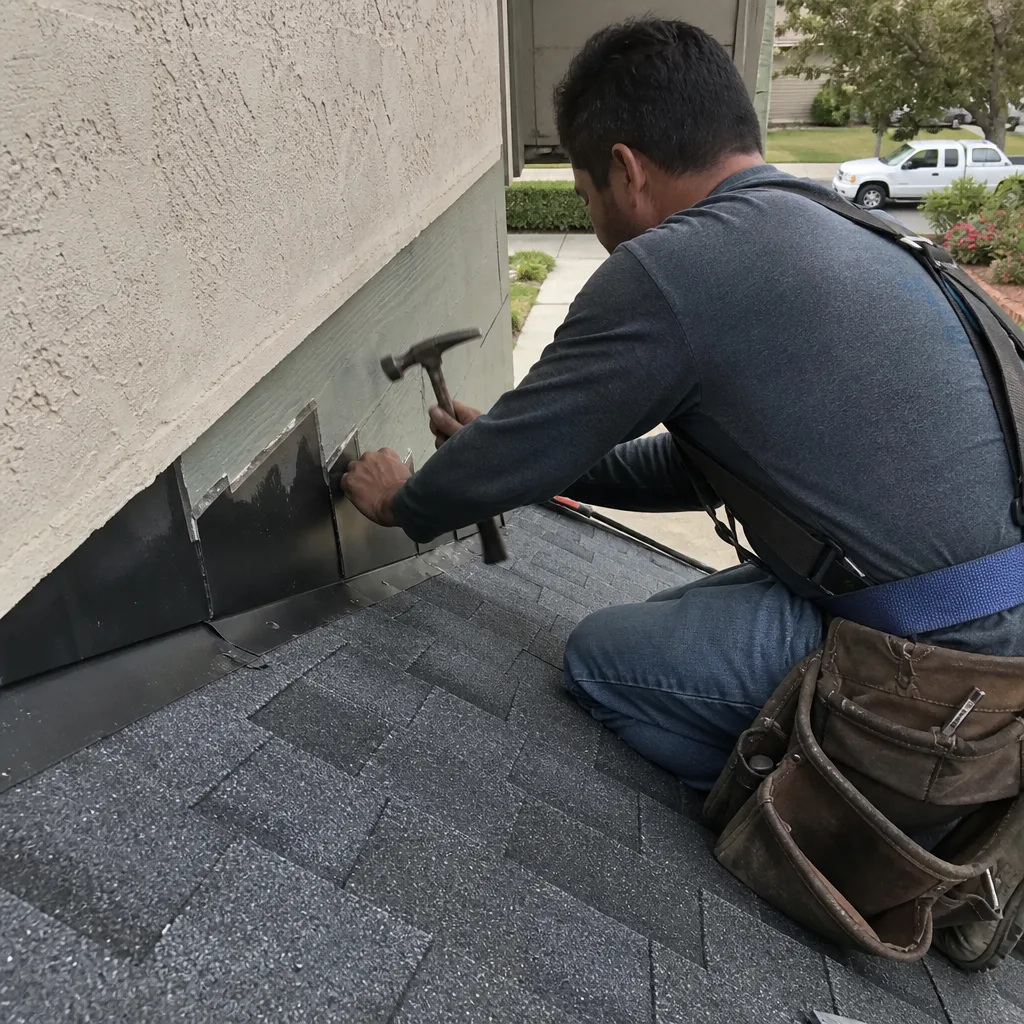
Santa Clara’s seasonal construction care is not about extreme weather preparation but about precise timing: October’s pre-rain envelope check, spring’s seismic access window, summer’s thermal threshold monitoring, and fall’s moisture transition. The homeowner who documents each inspection builds an asset that protects warranty coverage, supports resale value, and prevents the five-month moisture intrusion that a single missed caulk joint can permit. For tasks beyond inspection - structural repair, licensed trade work, or professional documentation - Rowan Construction Group Santa Clara provides written prices before work starts, permits and inspections included, with a 365-Day Done Right Promise backed by The Haven Standard. Call (669) 259-1843 to schedule your free estimate.
Written by Grant Rowan, Owner at Rowan Construction Group Santa Clara, serving Santa Clara since 2007.