
Last updated September 24, 2026
Free written scope consultation - allowances, timeline, and change-order rules on paper before a single trade is scheduled




Windows & doors


 Before
 After
After Before
 After
After Before
 After
AfterConstruction Warning Signs: A Santa Clara Homeowner’s Reference Guide
Here’s a number that gets overlooked: the Contractors State License Board receives more complaints about projects already in progress than about projects never started. In Santa Clara, where median home values have pushed past $1.4 million and a kitchen remodel runs $75,000 to $150,000, the warning signs that predict a bad outcome usually appear in the first five to ten days. Not during the dramatic collapse, but during the quiet moment when the contractor asks for 50% upfront and hands you a one-page estimate with no material specs. This guide is a phase-by-phase checklist of the documentation gaps, behavioral patterns, and procedural shortcuts that separate a managed project from an expensive dispute, complementing our step-by-step guide to hiring a construction contractor in Santa Clara. We’ve delivered over 4,000 projects since 2007, and the patterns are consistent enough to document.
Quick Answer
The most reliable construction warning signs are documentation failures, not dramatic failures: no written scope with line-item pricing, permits pulled in the homeowner’s name rather than the contractor’s, payment schedules front-loaded above 10% deposit, and change orders presented verbally without a signed amendment. In Santa Clara, these gaps predict cost overruns and disputes with high accuracy and are visible within the first week of engagement.
Table of Contents
- Pre-Construction Red Flags: Before Anyone Picks Up a Tool
- Permit and License Verification in Santa Clara
- Contract Review Checklist: Seven Non-Negotiable Clauses
- During-Construction Warning Signs
- Documentation Standards: What You Should Receive and When
- Legitimate Complications vs. Contractor Excuses
- Santa Clara Enforcement and Legal Recourse
- Common Mistakes to Avoid
- When to Call a Professional
- Frequently Asked Questions
- The Bottom Line
 Before
 After
AfterPre-Construction Red Flags: Before Anyone Picks Up a Tool
The most expensive mistakes in residential construction are contracted, not constructed. In Santa Clara’s competitive market, where homeowners often interview three to five contractors for a single project, the pressure to sign quickly is real - which is why we published a DIY vs Professional Construction guide for Santa Clara homeowners to help you evaluate your options. The contractors who create that pressure are often the ones to avoid.
Here are the specific pre-construction warning signs that predict downstream problems:
- No written scope with line-item pricing. A single-page estimate with a bottom-line number and no breakdown of materials, labor, and permits is not a quote; it’s a placeholder. Under Clause 1 of The Haven Standard, the price is written before anyone starts, with every line item specified. If a contractor says, “I’ll itemize it after we begin,” the project has already begun without a defined scope.
- Permits discussed as optional or “your call.” In Santa Clara, permits are required for structural work, electrical, plumbing, HVAC, and any alteration affecting egress or load-bearing walls. A contractor who suggests pulling a permit “only if you want” is proposing to leave you with uninspected work that must be disclosed on resale and may require costly remediation. Worse, if the permit is pulled in your name rather than the contractor’s, you assume liability for code compliance and worker injuries on your property.
- Materials listed as “allowances” without a capped range. An allowance is a budget placeholder, not a price commitment. We’ve reviewed competitor quotes where tile allowances were set at $4 per square foot when the selected material ran $18 per square foot, creating a $3,000-$5,000 gap on a typical Santa Clara bathroom. A legitimate quote specifies the allowance and the cap: “Ceramic tile allowance, $4-$8 per square foot, customer selection finalizes price.”
- Payment schedule front-loaded toward deposit. California law limits residential construction deposits to 10% or $1,000, whichever is less, for projects under certain thresholds, and reputable contractors in Santa Clara rarely request more than 10% regardless of project size. A request for 25%, 33%, or 50% upfront is a cash-flow problem being transferred to you. The standard progression is: deposit upon signing, progress payments tied to inspection milestones, and final payment upon final inspection and punch-list completion.
- No discussion of change-order protocol. Every project encounters something unexpected: buried conduit, rot behind siding, soil conditions that require deeper footings. The question is not whether a change will occur, but how it will be documented and priced. A contractor who says, “We’ll figure it out as we go,” is describing a dispute. Under The Haven Standard, no work proceeds on a change until the change order is signed, with a written price and scope amendment. This discipline is why our projects finish within a few percent of the agreed number.
- No proof of insurance or bond provided on request. In Santa Clara, licensed contractors must carry workers’ compensation insurance if they have employees, and general liability coverage is standard practice. Request a certificate of insurance naming you as additional insured during the project period. A contractor who delays or deflects this request is often uninsured or underinsured.
In the Rivermark and Northside neighborhoods, where many homes were built during the 1960s building boom, we’ve seen contractors exploit homeowner optimism about “quick updates” by skipping these documentation steps. The quick update becomes a six-month ordeal when the scope was never defined.
Permit and License Verification in Santa Clara
Permit status is public record, and checking it takes five minutes. The failure to check is a leading cause of the CSLB complaints filed by Santa Clara homeowners.
Step-by-step verification:
- Verify the contractor’s license at checkthelicense.cslb.ca.gov. Confirm the license is active, the classification matches the work (B-General for whole-house or multi-trade, C-36 for plumbing, C-10 for electrical, etc.), and the bond is current.
- Check whether the contractor’s license history includes suspensions or disciplinary actions. These are listed in the CSLB record and are more predictive of future problems than review ratings.
- Verify permit status through the City of Santa Clara Building Inspection Division. For active projects, you can confirm whether a permit was issued, whether inspections are scheduled, and whether any inspections have failed and require re-inspection. The city’s online portal provides this data by address.
- Confirm who holds the permit. The permit holder is the responsible party. If the permit is in your name, you are the responsible party for code compliance, and your homeowner’s insurance may not cover worker injuries if the contractor lacks workers’ compensation. If the permit is in the contractor’s name, they carry that liability and must coordinate inspections.
Santa Clara’s Building Inspection Division operates with specific requirements for fire separation in attached dwellings, energy compliance under Title 24, and seismic bracing for water heaters. A contractor unfamiliar with these local amendments, or unwilling to coordinate inspections around them, is not equipped for Santa Clara work. We’ve encountered projects in the Old Quad where previous contractors failed the rough inspection three times because they applied San Jose practices to Santa Clara’s specific shear-wall nailing schedule.
The Rowan Construction Group Santa Clara home page includes our license status and documentation standards for review before any consultation.
Contract Review Checklist: Seven Non-Negotiable Clauses
A construction contract is a risk allocation document. The clauses that protect you are the ones that define what happens when something goes wrong, not when everything goes right. Here are the seven clauses every Santa Clara homeowner should verify before signing:
- Detailed scope of work with specifications. The contract should reference attached plans, material schedules, and fixture schedules by brand and model number. “Install cabinets” is insufficient. “Install KraftMaid Vantage Series maple cabinets, Dove White finish, soft-close hinges, per attached elevation A-3” is sufficient. This specificity prevents the “I thought you meant…” dispute that generates CSLB complaints.
- Fixed price or guaranteed maximum with change-order protocol. The price should be stated as a single number with the explicit caveat that changes require a signed amendment. Avoid “cost-plus” arrangements unless you have construction accounting experience and time to review weekly invoices. Under The Haven Standard, the quote is a flat price with a written scope; “call for a quote” is not an option here.
- Payment schedule tied to progress, not calendar dates. Payments should be due upon completion of defined milestones: foundation inspection passed, framing inspection passed, final inspection passed. Calendar-based payments (“Month 2 payment due March 15”) incentivize delay, since the contractor is paid regardless of progress.
- Start and completion dates with liquidated damages. The contract should state a start date (or a window, e.g., “within 14 days of permit issuance”) and a substantial completion date. Liquidated damages, a pre-agreed daily rate for delay beyond excusable causes, keep both parties accountable. In Santa Clara, where weather delays are minimal compared to other regions, completion dates are more reliable than in wetter climates.
- Warranty terms in writing. The 365-Day Done Right Promise, printed on every page and backed by a terms page, not an asterisk, is our standard. Any warranty shorter than one year for workmanship, or any warranty that excludes specific trades, should be questioned. Manufacturer warranties on materials (Owens Corning roofing systems, Kohler fixtures) are separate and should be documented with registration instructions.
- Lien waiver exchange at each payment. California law provides mechanics lien rights to contractors, subcontractors, and material suppliers. A conditional lien waiver upon progress payment, and an unconditional waiver upon final payment, protects you from paying twice if the contractor fails to pay their suppliers. The contract should specify that lien waivers are exchanged at each payment milestone.
- Dispute resolution mechanism. The contract should specify whether disputes go to binding arbitration, non-binding mediation, or litigation, and in which venue. Santa Clara County Superior Court is the default venue for local projects; arbitration clauses should be reviewed carefully, as they limit appeal rights and may increase costs for smaller disputes.
We provide a written price with a written scope and a written warranty on every trade, from Kitchen Remodeling in Santa Clara through Home Additions and ADUs. The contract is the foundation of that commitment.
During-Construction Warning Signs
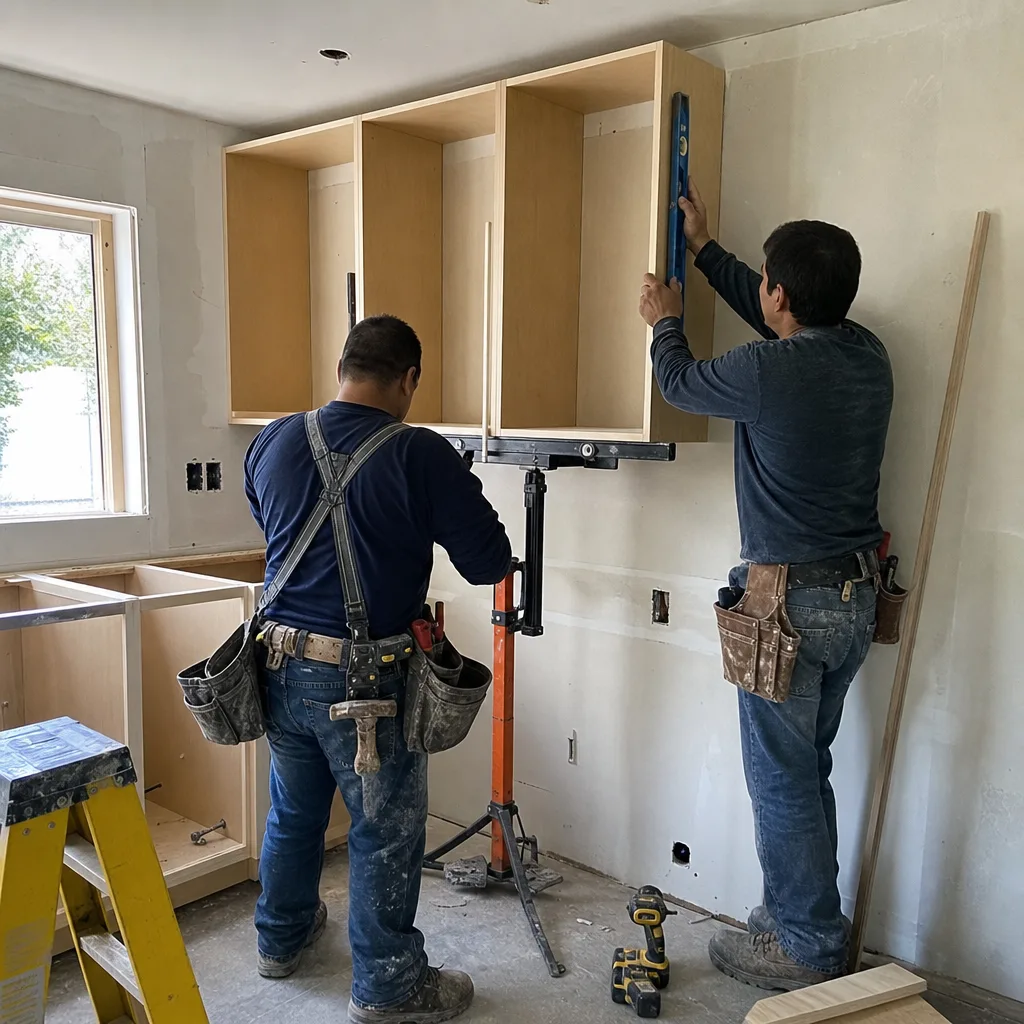
Once work begins, the warning signs shift from documentation gaps to behavioral patterns. These are harder to spot because the homeowner is often at work while the crew is on-site, and because progress creates a momentum that discourages scrutiny.
Subcontractors arriving without being named in the contract. Your contract should list or reference all subcontractors performing work over $500. An unnamed plumber or electrician is an uninsured liability. In Santa Clara, where electrical and plumbing permits require licensed specialists, an unlisted subcontractor may also be unlicensed. Request the subcontractor’s license number and verify it independently.
Change orders presented verbally. A contractor who says, “We found rot in the subfloor, it’ll be about three grand,” and proceeds without a written amendment is creating a dispute. The verbal change order is unenforceable in your favor and enforceable against you if the contractor documents it differently. Under The Haven Standard, no work proceeds on a change until the change order is signed, with a written price and scope - a discipline that also appears in our Kitchen Remodeling Maintenance Checklist for Santa Clara Homeowners. This is not bureaucracy; it is the administrative discipline that has kept our projects within a few percent of the agreed cost.
Work proceeding without scheduled inspections. In Santa Clara, inspections are required at rough electrical, rough plumbing, framing, insulation, and final for most projects. Drywall installed over uninspected electrical is a red flag: it conceals work that may not meet code, and removing it for inspection is expensive. A contractor who says, “We’ll call for inspection later,” or who covers work before inspection, is either inexperienced or evading scrutiny.
Material substitutions without written approval. The contract specifies Owens Corning Duration shingles in Estate Gray, and the crew arrives with IKO Cambridge in Harvard Slate. This is not an equivalent substitution; it is a contract breach unless you approve it in writing. Material substitutions affect warranty coverage, resale disclosure, and performance. We source across fifty-plus vetted brands, including Owens Corning, IKO, Atlas, and Tamko roofing, to provide honest numbers in the written quote rather than inflating the estimate or substituting cheaper materials later.
Crew changes without explanation. A consistent crew indicates a stable contractor. Frequent crew changes, or the appearance of day laborers without company identification, suggest subcontracting chaos or labor law non-compliance. Our crews are background-checked and uniformed; the technician who arrives is the technician documented in your project file.
Progress payments requested without visible progress. The second payment is due upon framing inspection, but framing is not complete and no inspection has occurred. This is a cash-flow crisis being managed at your expense. Tie every payment to a defined, verifiable milestone.
In the Mission Santa Clara and Westwood Oaks areas, where many homes are entering their fourth or fifth decade, we’ve rescued projects where the original contractor abandoned the job after collecting 60% of the contract value. The warning signs were present: verbal change orders, unlisted subcontractors, and payments requested ahead of milestones.
Documentation Standards: What You Should Receive and When
Documentation is evidence. In a dispute, the party with contemporaneous written records prevails. Here is the documentation standard that protects Santa Clara homeowners:
| Document | When Provided | What It Should Contain |
|---|---|---|
| Written estimate/quote | Before signing | Line-item pricing, material specifications by brand and model, labor hours, permit fees, project duration |
| Signed contract with scope | At signing | All specifications incorporated by reference, payment schedule, start/completion dates, warranty terms, change-order protocol |
| Permit application copy | Upon filing | Contractor as permit holder, correct scope description, plan sets as submitted |
| Insurance certificate | Upon request, before work starts | General liability, workers’ compensation, policy dates covering project period, you named as additional insured if requested |
| Progress photo record | During project, at each milestone | Date-stamped images of conditions found and work completed, with annotations |
| Material delivery receipts | Upon delivery | Product codes matching contract specifications, quantities, delivery dates |
| Inspection results | Within 24 hours of inspection | Pass/fail status, corrections required, re-inspection date if failed |
| Lien waivers | At each payment | Conditional waivers upon progress payment, unconditional upon final, from contractor and all subcontractors/suppliers |
| Final walk checklist | At substantial completion | Punch-list items, completion dates, warranty registration instructions |
| Written warranty | At final payment | Workmanship warranty terms, duration, contact procedure for claims |
Our documented photo record on every visit is included as standard, not an upgrade. The customer leaves with evidence of what was found and what was done. This is not a marketing feature; it is a dispute-prevention tool that has protected both parties across 4,000-plus projects.
If your contractor cannot or will not provide these documents on the schedule described, you are not receiving professional service. The absence of documentation is itself a warning sign.
Legitimate Complications vs. Contractor Excuses
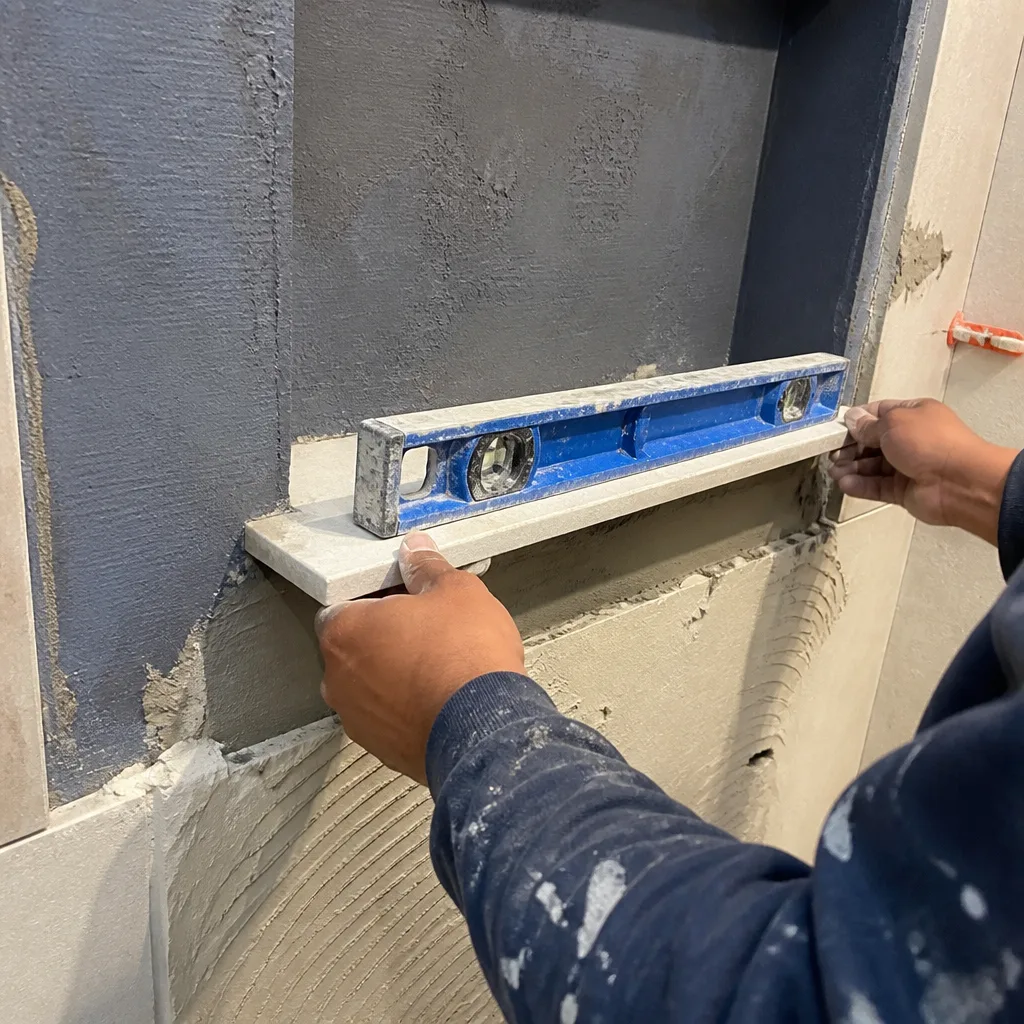
Not every delay or cost increase is a warning sign. Construction involves existing conditions that cannot be fully known until work begins. The skill is distinguishing a legitimate complication from a contractor using complexity as cover.
Legitimate complications:
- Termite damage concealed by finished surfaces. In Santa Clara’s older neighborhoods like the Old Quad and Laurelhurst, termite damage behind original lath-and-plaster is common and cannot be identified until demolition. The proper response is a stop-work notice, photo documentation, a written change order with remediation scope and price, and your signature before proceeding.
- Asbestos-containing materials in pre-1980 homes. Santa Clara’s housing stock includes thousands of homes built before asbestos regulation. Disturbing these materials without proper abatement is illegal and hazardous. Discovery requires licensed abatement, permit amendment, and schedule extension. This is not an excuse; it is a legal requirement.
- Soil conditions requiring engineering revision. The clay-heavy soils in parts of Santa Clara can expand and contract, requiring deeper footings or engineered fill for additions and ADUs. A soils report that contradicts the original geotechnical assumption is a legitimate basis for change, provided the change is documented and priced before the revised work proceeds.
- Supply chain delays for specified materials. Post-2020, lead times for cabinets, windows, and fixtures have been volatile. A contractor who communicates a delay with documentation from the supplier, offers equivalent alternatives with your approval, and adjusts the schedule accordingly is managing a legitimate issue.
Contractor excuses that are warning signs:
- “The city is being difficult about inspections.” Santa Clara’s Building Inspection Division operates under the same California Building Code as every other jurisdiction. Inspections fail for specific, code-cited reasons. A contractor who blames the inspector without citing the code section is concealing deficient work. Request the correction notice and verify it with the inspector.
- “We need more money to finish because materials went up.” A fixed-price contract allocates material price risk to the contractor. If the contract specifies a material at a price and that material is available, the contractor’s procurement failure is not your obligation. The exception is if you selected a material after the contract was signed and its price was unknown at the time of contracting.
- “The subcontractor didn’t show, so we had to use someone else.” Subcontractor management is the contractor’s responsibility. An unvetted replacement subcontractor is a breach of the implied duty to perform with qualified personnel. The proper response is schedule extension with your approval, not unilateral substitution.
- “It’s more complicated than we thought.” Complexity without specificity is an excuse. A legitimate complication is described in terms of what was found, what code or engineering requirement applies, and what the revised scope and price are. Vague complexity claims are used to justify open-ended billing.
The Haven Standard requires that every complication be documented with photos, described in writing, and priced before any additional work proceeds. This discipline protects both parties from the ambiguity that generates disputes.
Santa Clara Enforcement and Legal Recourse
When warning signs become active problems, Santa Clara homeowners have specific enforcement paths. Understanding these paths before you need them improves their effectiveness.
CSLB complaint filing. The Contractors State License Board accepts complaints at cslb.ca.gov for violations of the Contractors License Law, including abandonment, misrepresentation, and work not performed to contract. The CSLB can suspend or revoke licenses, issue citations, and refer cases to the Attorney General for criminal prosecution in egregious cases. The complaint process takes six to eighteen months and is most effective when supported by contemporaneous documentation: contracts, change orders, payment records, photos, and correspondence.
City of Santa Clara Building Inspection Division. The Building Inspection Division can issue stop-work orders for unpermitted work, failed inspections that are concealed, and unsafe conditions. They cannot resolve contract disputes or order refunds; their authority is limited to code compliance and permit enforcement. However, a stop-work order creates leverage in a dispute and protects you from defective work being covered. Contact them at santaclaraca.gov for active project concerns.
Santa Clara County Superior Court. For disputes under $12,500, small claims court is accessible without an attorney and resolves in approximately three to six months. For larger disputes, limited civil or unlimited civil litigation applies. The contingency of attorney representation depends on the amount in controversy and the strength of documentation. A construction attorney in Santa Clara typically charges $350-$600 per hour for consultation and document review.
When to involve a construction attorney:
- The contractor has abandoned the project with substantial payment received
- A mechanics lien has been filed against your property by a subcontractor or supplier
- The dispute involves structural defects that threaten safety or habitability
- The CSLB complaint has been filed but the contractor continues to operate on other projects
- You are considering binding arbitration under a contract clause and need to understand the implications
We offer a Free Second Opinion on any written estimate. Bring a competitor’s quote and we will review it line by line at no charge. This service has identified front-loaded payment schedules, uncapped allowances, and missing permit contingencies for Santa Clara homeowners before they signed.
Common Mistakes to Avoid
- Accepting a “verbal estimate” as sufficient for decision-making. A verbal estimate is not enforceable and often understates actual costs by 30% or more. Require a written price before any work starts, every time, on every trade.
- Paying the deposit before verifying permit status. In Santa Clara, permit issuance can take two to six weeks depending on project complexity. Paying a deposit before the permit is filed or approved creates a gap where the contractor holds your funds without a defined start path.
- Signing a contract that assigns permit responsibility to you. The permit holder is the responsible party. A contract that requires you to pull permits is transferring liability for code compliance and worker safety to you without corresponding control over the work.
- Neglecting to request and retain lien waivers. California mechanics lien law allows subcontractors and suppliers to lien your property even if you paid the general contractor in full. Lien waivers at each payment milestone are your protection.
- Allowing “friendliness” to substitute for documentation. The contractor who brings coffee and remembers your children’s names is not necessarily the contractor who documents change orders. Personal rapport does not replace written scope, written price, and written approval.
- Failing to photograph existing conditions before work begins. In Santa Clara’s dense neighborhoods, where homes share property lines and landscaping is mature, pre-construction photo documentation protects against damage claims and establishes baseline conditions for permit compliance.
- Ignoring the 10% deposit rule for emotional reasons. A contractor who says, “I need 25% to secure materials” is describing their cash-flow problem, not your project requirement. The 10% limit exists because deposits beyond that threshold correlate strongly with abandonment and bankruptcy.
When to Call a Professional
Call a licensed contractor when you encounter any of the following: a permit stop-work order on your property, a mechanics lien filing, structural movement or cracking during an active project, electrical or plumbing work performed without inspection, or a contractor who has abandoned the job with payment in hand. These situations require professional assessment and often legal coordination.
For homeowners evaluating a new project or reviewing an existing contractor’s performance, Rowan Construction Group Santa Clara offers free estimates in Santa Clara - call (669) 259-1843. We provide written prices before any work starts, documented photo records on every visit, and the 365-Day Done Right Promise backed by The Haven Standard. Our license number is on every page; every crew member is verified before they arrive.
Frequently Asked Questions
California law limits residential construction deposits to 10% or $1,000, whichever is less, and reputable Santa Clara contractors rarely request more regardless of project size. A request for 25% or more is a warning sign of cash-flow distress. Call (669) 259-1843 for a free estimate with our standard payment schedule - estimates are free.
Stop work immediately and contact the City of Santa Clara Building Inspection Division. Unpermitted work exposes you to stop-work orders, retroactive permit fees, and personal liability for worker injuries. The Building Inspection Division can issue a stop-work order and guide you on permit requirements. If the contractor refuses to permit, file a CSLB complaint and consult a construction attorney before proceeding.
A legitimate change order describes what was found, cites the applicable code or engineering requirement, includes photos of the condition, and provides a written price and scope amendment before any additional work proceeds. An inflated excuse uses vague language like “more complicated than expected” without specificity, presents the price verbally, and pressures immediate approval. Under The Haven Standard, no work proceeds on a change until the change order is signed.
You should receive: a written quote with line-item pricing before signing; a signed contract incorporating all specifications; permit confirmation with the contractor as permit holder; date-stamped progress photos at each milestone; material delivery receipts matching contract specifications; inspection results within 24 hours; lien waivers at each payment; and a final walk checklist with warranty documentation. Our Kitchen Remodeling in Santa Clara service includes all of these as standard, not upgrades.
If the contractor lacks workers’ compensation insurance and the permit is in your name, you may face personal liability for worker injuries under California law. Verify the contractor’s workers’ compensation coverage before work begins and ensure the permit is in the contractor’s name, not yours. Request a certificate of insurance naming you as additional insured during the project period.
File with the CSLB at cslb.ca.gov for license violations including abandonment, misrepresentation, and deficient work. For active code violations or unpermitted work, contact the City of Santa Clara Building Inspection Division. For disputes involving significant sums or structural safety, consult a construction attorney before filing. Document everything: contracts, payments, photos, and correspondence strengthen your case substantially.
A mechanics lien is a claim against your property recorded with the county recorder, clouding title until resolved. A stop notice is a claim against construction funds held by a lender, freezing disbursement until the claim is resolved. Both can be filed by contractors, subcontractors, or material suppliers who have not been paid. Lien waivers at each payment milestone, exchanged before each payment, are your protection against both. Call (669) 259-1843 if you have received a lien notice and need guidance - estimates are free.
The Bottom Line
The warning signs that predict construction disputes are visible early, documented in writing, and consistent across project types. No written scope, permits in the homeowner’s name, front-loaded payments, verbal change orders, and missing documentation are not minor procedural lapses; they are the patterns that precede cost overruns, abandonment, and litigation. In Santa Clara’s high-value market, where a typical remodel represents a significant capital commitment, the discipline of documentation protects your investment more than any material selection. For more guides & resources on managing your project, see our blog.
We’ve delivered over 4,000 projects since 2007, every one with a written price before work started and a documented record when the crew left. The Haven Standard exists because these protections should not depend on which contractor you happen to find.
Written by Grant Rowan, Owner at Rowan Construction Group Santa Clara, serving Santa Clara since 2007.